
Emulsification Mechanism: The Ultimate Guide to Industrial Demulsification
Understanding the industrial emulsification mechanism is essential for developing stable fluid technologies in chemical manufacturing. At Kemaix, we specialize in precise molecular engineering to help clients manage the delicate balance between creating stable emulsions and effective demulsification.
Quick Links: Lipophilic Span Series | Hydrophilic Tween Series
2. Why Does Oil Not Dissolve in Water? The Molecular Perspective
To master any industrial emulsification mechanism, one must first understand molecular polarity. Water molecules bind tightly via a robust hydrogen bond network, effectively excluding non-polar hydrocarbon oils unless a surfactant is introduced to bridge the gap.
Formulator’s Note: The interfacial tension between oil and water is the primary energy barrier. Surfactants lower this energy, allowing for the formation of stable droplets during the emulsification process.
3. Surfactant Structure: The Key to the Mechanism
The success of an industrial emulsification mechanism depends entirely on the surfactant’s amphiphilic structure. A primary example in our production is Sodium Sulfated Butyl Oleate, which features a dual-functional molecular design:
4. Governing the Mechanism via HLB Value
The HLB (Hydrophile-Lipophile Balance) value is the most practical metric for managing the emulsification mechanism in industrial R&D.
| HLB Range | Industrial Application | Recommended Surfactant |
|---|---|---|
| 3.0 – 6.0 | W/O Emulsions (Lubricants) | Span Series |
| 8.0 – 18.0 | O/W Emulsions (Cleaning/Agro) | Tween Series |
6. Case Study: Emulsification Mechanism in Field Applications
In practice, the industrial emulsification mechanism must be adapted to the specific chemical environment of the end-use application. Here are two critical scenarios where Kemaix surfactants play a decisive role:
A. High-Speed Metalworking Fluids (MWFs)
In CNC machining, emulsions face extreme shear forces and thermal stress. A simple emulsifier isn’t enough; the mechanism requires a co-surfactant system. By combining our Span 80 with high-HLB ethoxylates, we create a dense interfacial film that prevents droplet coalescence even under 5000+ RPM conditions.
B. Agrochemical EC and SC Formulations
The emulsification mechanism in pesticides is complicated by the presence of electrolytes and hard water. We utilize Zeta potential stabilization. By introducing anionic components alongside non-ionic surfactants, we create a “double layer” of protection—electrostatic and steric—ensuring the active ingredient remains evenly dispersed for months in storage.
Technical FAQ
Q: How does the emulsification mechanism impact hard water tolerance?
A: In hard water, Calcium and Magnesium ions react with anionic surfactants to form insoluble metallic soaps. This disrupts the emulsification mechanism and leads to rapid phase separation.
Q: Why is Sodium Sulfated Butyl Oleate preferred for cutting oils?
A: It offers a unique surfactant molecular structure that provides both extreme lubricity and powerful emulsification, making it a star performer in the Kemaix portfolio.
Q: What is the primary difference between emulsification and demulsification?
A: Emulsification focuses on creating a stable interface to mix oil and water, while industrial demulsification focuses on destroying that interface to achieve rapid phase separation.
Q: How do you measure the success of an industrial emulsion?
A: Key indicators include particle size distribution (PSD), Zeta potential for electrostatic stability, and long-term shelf-life tests under varying temperature cycles.
5. Industrial Demulsification: The Reverse Process
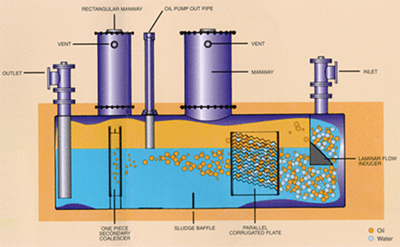
In waste management and oil recovery, the industrial demulsification mechanism is used to break unwanted stable emulsions through Zeta potential neutralization or chemical displacement.
Solve Your Emulsification Challenges
Need help balancing stability and performance? Kemaix provides high-purity surfactants and expert technical analysis to optimize your formulations.
Request Technical Support & Samples