
Evidence note: Capacity is a Kemaix company-reported operating metric, reviewed 13 August 2026. Confirm the current ISO certificate and its applicable scope. Sample availability and standard lead time are service targets and must be confirmed in the written quotation.
Which PPG Molecular Weight Should You Start With?
Definition: Polypropylene glycol (PPG) is a propylene-oxide polyether supplied in grades named by approximate average molecular weight. As molecular weight rises, viscosity and hydrophobic character generally increase, while water compatibility falls; selection therefore starts with viscosity, phase compatibility and the required balance of lubrication and foam control.
| Selection need | Starting grade group | Why it fits | Validate before scale-up |
|---|---|---|---|
| Lower viscosity, carrier or formulation aid | PPG-200 to PPG-600 | More fluid and relatively more water-compatible | Solubility, viscosity and moisture sensitivity |
| Balanced lubrication and foam control | PPG-1000 to PPG-2000 | Intermediate viscosity and hydrophobicity | Foam knockdown, persistence and process temperature |
| Higher lubricity or hydrophobic industrial systems | PPG-3000 to PPG-8000 | Higher viscosity and reduced water compatibility | Pumping, dispersion, carryover and finished-fluid stability |
Data basis and limits: Grade groupings and typical properties are derived from the current Kemaix series specification reviewed 13 August 2026; they are not batch-release limits. Confirm the grade-specific TDS, SDS and COA. US food-processing provisions are narrow: 21 CFR 173.340 identifies permitted defoaming uses and conditions, including specified polypropylene-glycol molecular weights. A regulatory listing does not establish that every Kemaix PPG grade is suitable for food use.
More Hydrophobic Than PEG — and That's the Point
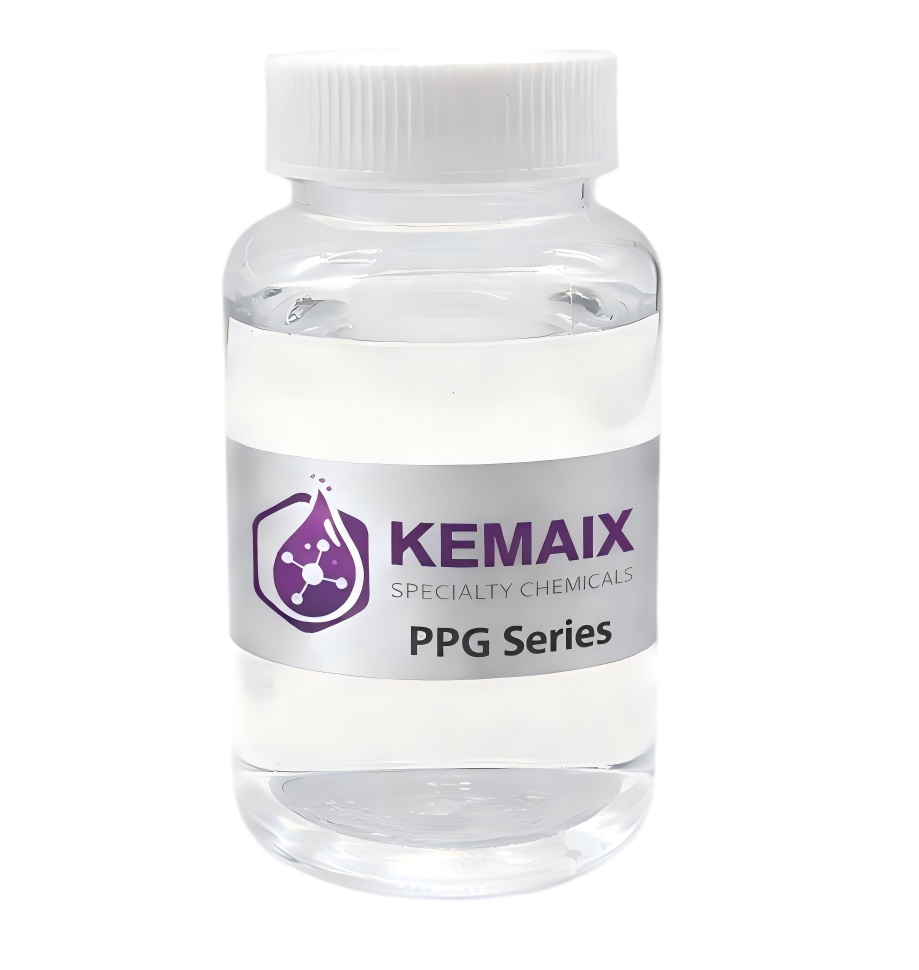
PPG is the propylene-oxide counterpart to PEG. Swapping EO for PO makes the chain markedly more hydrophobic, and at higher molecular weights PPG becomes largely water-insoluble.
That is exactly what makes it useful where PEG is not: as a lubricant in oil-based systems, a defoamer in aqueous ones, and a dispersant in coatings. It is also the hydrophobic core of every EO/PO block copolymer we make.
- CAS Number25322-69-4
- Chemical CompositionPropylene oxide condensate
- Ionic TypeNonionic polyether
- Standard GradesPPG-200 to PPG-8000
- AppearanceColorless transparent viscous liquid
- SolubilityDecreasing water solubility with rising molecular weight
PPG Series Technical Specifications
| Grade | Appearance (25°C) | Color (Pt-Co) | Hydroxyl Value (mgKOH/g) | Molecular Weight | Acid Value (mgKOH/g) | Moisture (%) | pH (1% aq.) |
|---|---|---|---|---|---|---|---|
| PPG-200 | Colorless transparent viscous liquid | ≤ 20 | 510–623 | 180–220 | ≤ 0.5 | ≤ 0.5 | 5.0–7.0 |
| PPG-400 | Colorless transparent viscous liquid | ≤ 20 | 255–312 | 360–440 | ≤ 0.5 | ≤ 0.5 | 5.0–7.0 |
| PPG-600 | Colorless transparent viscous liquid | ≤ 20 | 170–208 | 540–660 | ≤ 0.5 | ≤ 0.5 | 5.0–7.0 |
| PPG-1000 | Colorless transparent viscous liquid | ≤ 20 | 102–125 | 900–1100 | ≤ 0.5 | ≤ 0.5 | 5.0–7.0 |
| PPG-1500 | Colorless transparent viscous liquid | ≤ 20 | 68–83 | 1350–1650 | ≤ 0.5 | ≤ 0.5 | 5.0–7.0 |
| PPG-2000 | Colorless transparent viscous liquid | ≤ 20 | 51–63 | 1800–2200 | ≤ 0.5 | ≤ 0.5 | 5.0–7.0 |
| PPG-3000 | Colorless transparent viscous liquid | ≤ 20 | 34–42 | 2700–3300 | ≤ 0.5 | ≤ 0.5 | 5.0–7.0 |
| PPG-4000 | Colorless transparent viscous liquid | ||||||
| PPG-8000 | Colorless transparent viscous liquid |
PPG-4000 and PPG-8000 are supplied as standard grades; grade-specific parameters are issued with the TDS and COA on request.
Where PPG Grades Are Used
PPG-200 / 400 / 600
Lubricants, defoaming agents and dispersants in coatings and industrial systems, where low viscosity and oil compatibility matter.
PPG-1000 / 1500
Lubricants, hydraulic fluids and heat transfer systems benefiting from higher viscosity and thermal stability.
PPG-2000 / 3000 and above
Metalworking fluids, rubber processing and high-temperature lubrication.
Defoaming
PPG is a common base for polyether defoamers. For formulated foam control, see our polyether defoamer range.
Selection & Handling Notes
⚠ Water solubility falls with molecular weight
Low-MW PPG is partly water-miscible; high-MW grades are largely insoluble. Confirm behaviour at the grade you specify, not the family.
⚠ Food-processing use is narrowly defined
Standard grades on this page are presented for industrial use. Confirm the exact molecular weight, intended process, applicable regulation and supporting documentation before any food-related qualification.
⚠ Match viscosity to the system
Viscosity rises sharply with molecular weight. Over-specifying MW can cause pumping and dispersion problems in the finished fluid.
⚠ Control moisture in sealed systems
Keep containers closed. Moisture pick-up affects performance in hydraulic and heat-transfer duty.
Packaging, Storage & Shipping
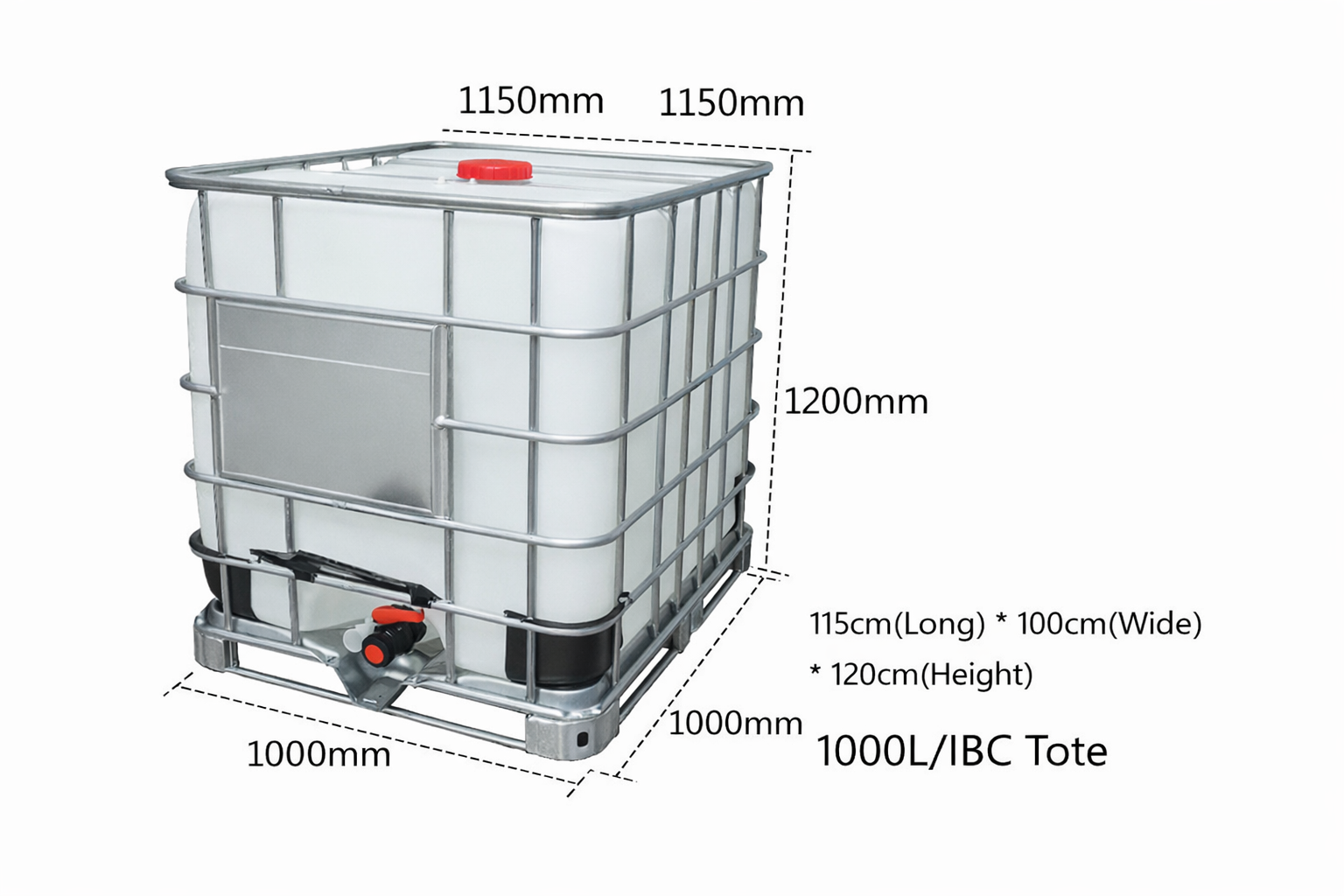
Packaging: 200 kg drums, 1000 kg IBC tanks and bulk. Non-hazardous for general transportation.
Storage: Cool, dry and well-ventilated conditions with containers kept closed. Shelf life 2 years from date of manufacture.
Shipping: FOB, CIF and CFR as FCL or LCL via Shanghai Port, with TDS, SDS and COA available for customs and customer regulatory review. Confirm REACH registration, Only Representative coverage and intended-use applicability for the specific grade and destination market.
PPG and Polyethers in Oilfield Formulations
For defoaming, lubrication, demulsification and oil-compatible surfactant selection, read the oilfield surfactants applications guide.
Metalworking resources: Learn how to apply PAG in metalworking fluids for lubrication and foam control, and compare surfactant functions in cutting-fluid formulations.
Frequently Asked Questions
Selection resource: Compare PEG and PPG by water compatibility, physical form, molecular weight and use.
What is polypropylene glycol (PPG)?
PPG is a polyether of propylene oxide supplied as viscous liquids from PPG-200 upward. It is more hydrophobic than PEG and is used as a lubricant, defoamer and dispersant.
What is the main difference between PPG and PEG?
PEG is highly hydrophilic and water-soluble across its range. PPG is less water-soluble at higher molecular weights and offers superior lubricity and defoaming for oil-based applications.
Can PPG be used as a defoamer in food processing?
Kemaix standard PPG grades on this page are presented for industrial applications. Food-processing use is application- and molecular-weight-specific; confirm the exact grade, current 21 CFR provision and supporting documentation before qualification.
What is PPG used for in metalworking fluids?
Higher-MW grades provide high-temperature lubrication and foam control in cutting and grinding fluids, where clean carryover and thermal stability are required.
Do you support custom viscosity or molecular weight blends?
Custom targets can be reviewed against manufacturing feasibility. Confirm the agreed molecular-weight, viscosity and release limits in the written specification.
What free sample size is available?
Sample availability and size depend on the grade and destination. Confirm the current sample offer and courier documents in the written quotation.
Need a Specific PPG Molecular Weight or Viscosity?
Tell us the application, viscosity target and volume — we will recommend the grade, supply TDS and COA, and send 200–500 g samples for trials.