
Which Polyether Defoamer Family Should You Start With?
Definition: A polyether defoamer uses polyether chemistry for foam control. Confirm the exact composition and specifications from grade-specific documents. The family name alone does not establish silicone content, food-grade status or compatibility with your process.
| Process signal | Starting family | Primary selection reason | Validate in the real process |
|---|---|---|---|
| Long-cycle fermentation or persistent biological foam | KM-DG | Persistence-oriented polyether architecture | Minimum effective dose, oxygen transfer and downstream recovery |
| Fast foam knockdown in hot aqueous systems | KM-DA | Rapid spreading and knockdown | Operating temperature versus cloud point and re-dosing interval |
| High-solids or chemically complex formulation | KM-DE | Polyether-ester compatibility range | Dispersion, filtration, coating or finished-product compatibility |
Data basis and limits: Family-level guidance is based on Kemaix product architecture and application screening reviewed 13 August 2026; it is a shortlist, not a guaranteed formulation result. Final grade and dose require a controlled trial in the actual process. Cloud-point comparisons must state the test medium and method; ISO 1065:1991 specifies cloud-point methods for ethoxylated and mixed nonionic surface-active agents.
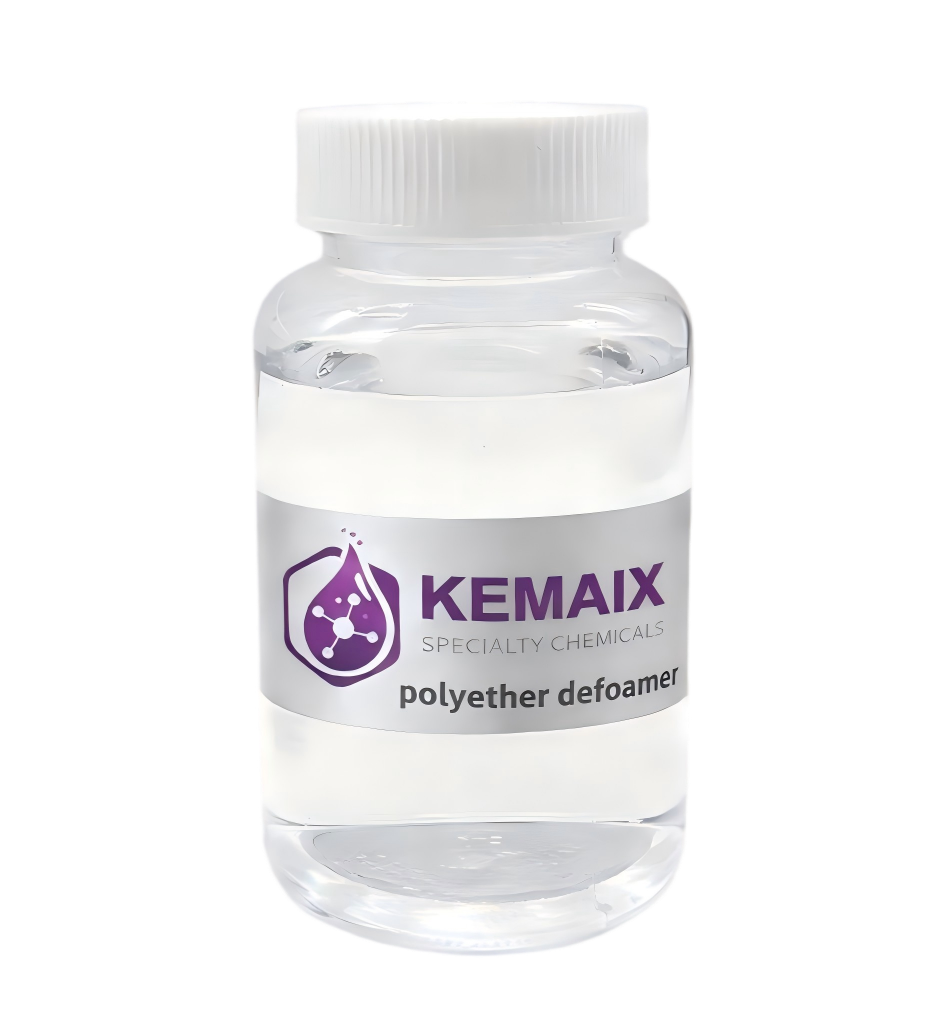
Polyether defoamers are a direct extension of Kemaix's EO/PO derivative chemistry.
A Polyether Specialist, Not a Catalogue
Nanjing Kemaix Advanced Materials Co., Ltd. is a manufacturer of polyether defoamers. Our nonionic surfactant range includes fatty alcohol ethoxylates. Our team has worked with EO/PO chemistry since 2010; this describes team experience, not the company's incorporation date.
Our range also includes PPG and EO/PO block copolymers. Share your target specification to discuss EO/PO ratio, molecular weight or cloud-point adjustments. Feasibility is assessed for each project. Request the selected grade's documents and a trial sample before confirming your order.
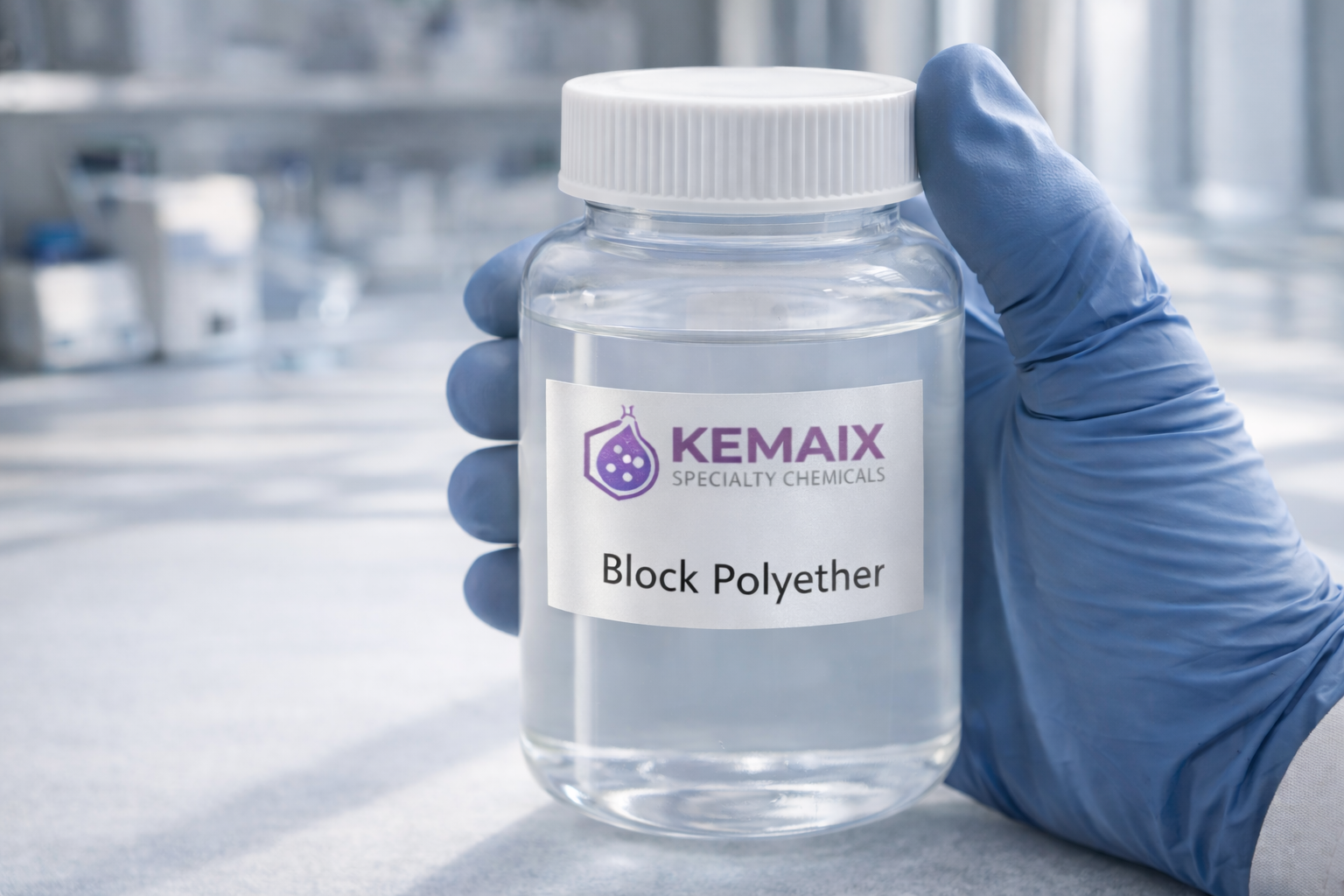
EO/PO polyethers become less soluble as temperature rises — the opposite of most surfactants.
Inverse Solubility: Why Polyethers Defoam Better When Hot
Polyether defoamers are built on ethylene-oxide / propylene-oxide chains (CAS 9003-11-6). Unlike conventional surfactants, their water solubility decreases as temperature rises.
Above the cloud point, the polyether comes out of solution as fine, insoluble droplets that spread across the foam lamella, displace the stabilising surfactant film and rupture the bubble — the point of maximum defoaming efficiency.
This is why polyethers suit hot, dynamic processes: fermenters, paper machine wet-ends, sugar evaporators and hot cleaning baths. Below the cloud point the product re-dissolves and acts as a persistent foam suppressant — knockdown and persistence from one chemistry.
Three Polyether Backbones, Nine KM Grades
Rather than one universal product, Kemaix builds foam control on three distinct backbones — each tuned to a different class of foaming system.
KM-DG — Glycerol-Based Polyether
Glycerol-initiated polyethers built for the toughest, longest-running foam: industrial fermentation. Engineered for outstanding persistence across long batch cycles rather than raw knockdown speed.
KM-DA — Fatty-Alcohol Block Polyether
Fatty-alcohol-initiated EO/PO block copolymers delivering fast knockdown at low cost. The workhorses for papermaking wet-end and concrete admixtures, where speed and economics decide.
KM-DE — Polyether Ester
Esterified polyethers with strong suppression in complex, high-solids or protein-rich systems — fermentation, sugar processing, paper sizing and wastewater, where simpler polyethers lose staying power.
KM Series Polyether Defoamers
| Grade | Backbone | Typical Applications | Key Feature |
|---|---|---|---|
| KM-DG100 | Glycerol polyether | Industrial fermentation | High-performance, long-lasting suppression |
| KM-DG200 | Glycerol polyether | Industrial fermentation | Excellent persistence in fermentation |
| KM-DG300 | Glycerol polyether | Industrial fermentation | Excellent persistence in fermentation |
| KM-DA100 | Fatty-alcohol block polyether | Papermaking (wet-end), concrete admixtures | Fast defoaming, cost-effective |
| KM-DA200 | Fatty-alcohol block polyether | Papermaking, concrete admixtures | Fast defoaming, cost-effective |
| KM-DA300 | Fatty-alcohol block polyether | Papermaking (wet-end) | Fast defoaming, stable performance |
| KM-DE100 | Polyether ester | Paper sizing, fermentation, sugar processing | Strong foam suppression in complex systems |
| KM-DE200 | Polyether ester | Fermentation, sugar processing | Strong foam suppression in complex systems |
| KM-DE300 | Polyether ester | Fermentation; wastewater application requires review | Strong adaptability in complex systems |
Custom synthesis available — cloud point, EO/PO ratio and persistence can be tailored to a specific process. Request the grade-specific TDS/COA for full specifications.
Which Grade for Which Process
Foam is not one problem. A protein-rich fermenter, a paper machine wet-end and an aeration basin each fail in different ways — and need different chemistry.
Industrial Fermentation
Start with broth composition, temperature, aeration, batch duration and downstream recovery requirements. Compare candidates in a representative trial and monitor foam control, oxygen transfer and recovery performance before scale-up.
Review KEMAIX-103 fermentation antifoam for a product-specific discussion. A food-grade KEMAIX-103 option is available. Confirm the applicable standard, intended use and supporting documents for the inquiry and batch; this is not a food-grade claim for the complete polyether defoamer range.
Papermaking
Wet-end foam traps air, causes pinholes and disrupts drainage and sheet formation. Fatty-alcohol block polyethers give the fast knockdown a machine needs; polyether ester suits surface sizing.
Water & Wastewater Treatment
Identify the foam source and operating conditions before choosing a candidate. Check the proposed formulation against your biological process, membrane system and discharge requirements. A silicone-free description does not establish membrane compatibility, biomass compatibility or discharge compliance.
Use the wastewater defoamer selection guide to plan a controlled comparison, record the dosing basis and define acceptance criteria before plant use. Record the untreated baseline and compare candidates under the same trial conditions.
Building Materials & Concrete Admixtures
Entrained air from polycarboxylate superplasticisers costs compressive strength. Fast-acting, cost-effective block polyethers control air content without over-dosing the mix.
Sugar Refining
Juice extraction, evaporation and crystallisation all foam, and any residue carries into a food product. Polyether esters give strong suppression with clean carryover behaviour.
Textile & Industrial Cleaning
Jet dyeing, scouring and high-agitation cleaning baths foam hard at temperature — where inverse solubility works in your favour.
When Polyether Chemistry Is the Right Fit
Every defoamer chemistry has a domain where it performs best. Polyether earns its place in aqueous systems with these characteristics:
| Process characteristic | Why polyether suits it |
|---|---|
| Elevated or variable temperature | Inverse solubility means efficiency rises above the cloud point — a natural fit for fermenters, wet-ends and evaporators. |
| Aqueous, surfactant-stabilised foam | Polyethers spread readily in water-based systems and destabilise surfactant-stabilised lamellae. |
| Downstream compatibility matters | Check the exact formulation and test downstream recovery, filtration or finished-product requirements. Chemistry alone does not establish compatibility with your process. |
| Long-duration foam suppression | Grade families can be selected for persistence rather than only fast knockdown. |
| Process-specific tuning needed | Cloud point, EO/PO ratio and molecular weight can be engineered to the system. |
Non-aqueous systems, extreme chemical environments or specific regulatory requirements may call for a different chemistry — tell us your process and we will say so honestly.
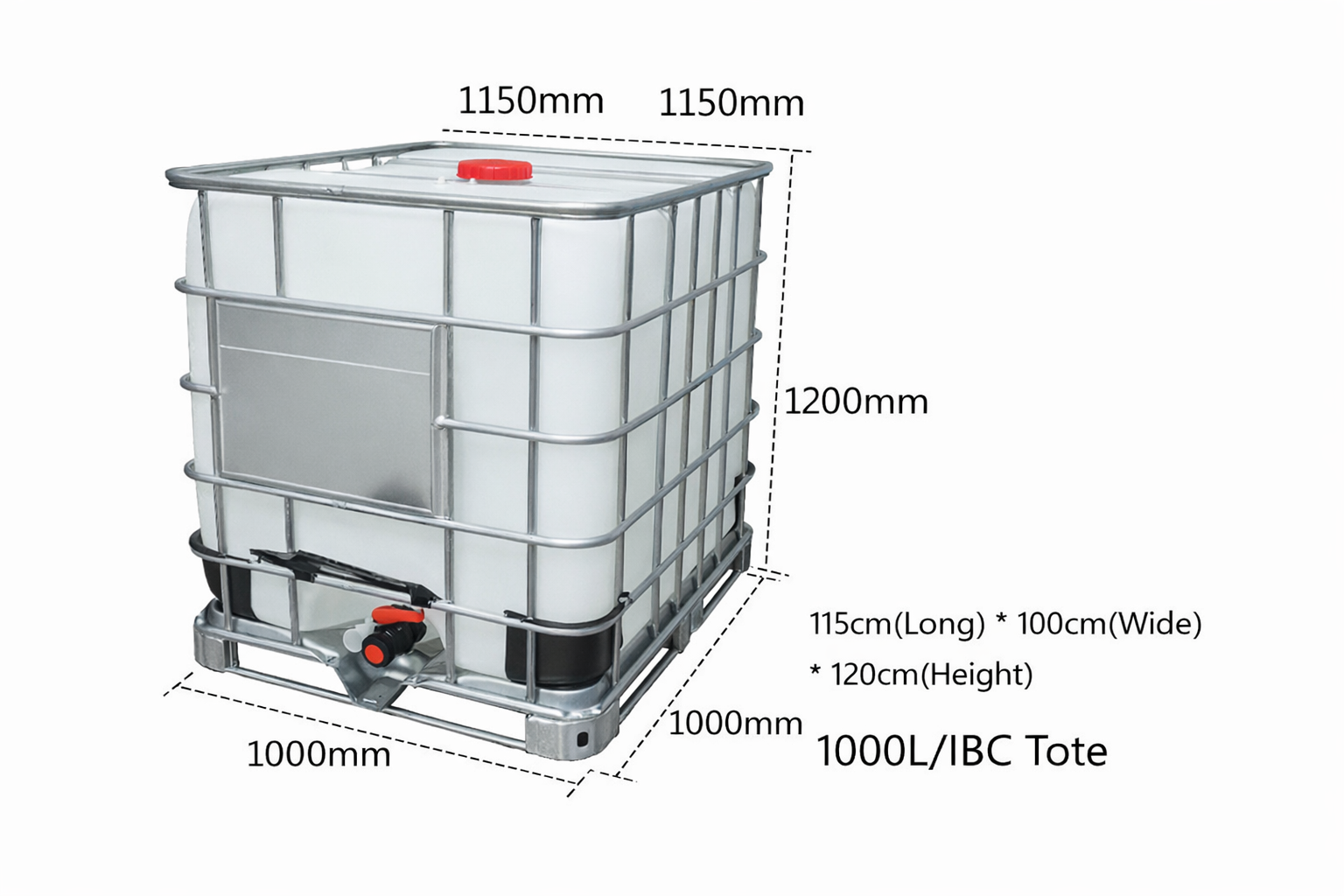
Supplied in 200 kg drums, 1000 L IBC and bulk.
Dosage, Handling & Packaging
Establish dosage through a controlled process trial. Confirm the candidate, concentration basis, operating conditions and acceptance criteria before comparing doses.
Compare addition points and dosing schedules under representative conditions. Record foam control and downstream effects; monitor oxygen transfer in biological systems.
Packaging: 200 kg drums, 1000 L IBC tanks and bulk. Store cool, dry and ventilated. Custom synthesis is available where a process needs a specific cloud point or persistence profile.
Common Foam-Control Failure Points
⚠ Cloud point vs process temperature
Defoaming efficiency peaks above the cloud point. If a grade under-performs, check whether your process actually runs above it — a mismatch, not the product, is usually the cause.
⚠ Over-dosing
More is not better. Excess defoamer wastes product, can suppress oxygen transfer in fermenters and may affect downstream steps. Titrate to the minimum effective dose.
⚠ Shock dosing instead of metering
A single large addition knocks foam down then fades. Continuous metered dosing sustains control across long batches.
⚠ Wrong backbone for the system
A fast-knockdown block polyether will not hold a 100-hour fermentation, and a persistence-tuned glycerol grade is overkill on a paper machine. Match the backbone to the failure mode.
Frequently Asked Questions
What is a polyether defoamer?
A polyether defoamer uses polyether chemistry for foam control. Confirm the exact composition and specifications from the grade-specific documents. The family name alone does not establish silicone content, food-grade status or downstream compatibility.
Why does a polyether defoamer work better at higher temperature?
Polyethers show inverse solubility: above the cloud point they become insoluble and disperse as fine droplets that rupture foam films most effectively. That makes them well suited to hot, dynamic processes such as fermenters, paper machine wet-ends and sugar evaporators.
How much defoamer should I dose?
There is no single dosage for the full range. Request grade-specific guidance, state the dosing basis and validate the dose in your process. Monitor foam control and downstream performance before scale-up.
Which grade should I use for industrial fermentation?
Glycerol-based grades KM-DG100, KM-DG200 and KM-DG300 are engineered for persistence across long batch cycles. For complex or high-solids broths, the polyether esters KM-DE100, KM-DE200 and KM-DE300 provide stronger suppression.
Which grade suits papermaking or concrete admixtures?
Fatty-alcohol block polyethers KM-DA100, KM-DA200 and KM-DA300 give fast, cost-effective knockdown for paper machine wet-end and concrete admixture systems; KM-DE100 is used in paper sizing.
What is the difference between the KM-DG, KM-DA and KM-DE families?
They differ in the polyether backbone. KM-DG is glycerol-initiated and tuned for persistence in fermentation; KM-DA is a fatty-alcohol block polyether tuned for fast, economical knockdown; KM-DE is an esterified polyether for strong suppression in complex, high-solids systems.
Can Kemaix customise a polyether defoamer for my process?
Yes. Because Kemaix manufactures the polyether itself, cloud point, EO/PO ratio, molecular weight and persistence can be engineered to a specific foam-suppression requirement. Share your process conditions for a matched recommendation.
Tell Us Where Your Foam Is Coming From
Send your application, operating conditions, foam description and downstream requirements. We will review the candidate grade, available documents and trial-sample request with you. Confirm MOQ, current availability and lead time for the selected product before ordering. Include any required food-grade standard or other qualification requirement in your inquiry.
Request a Grade Review