
Which castor oil ethoxylate grade should you choose?
Direct answer: Choose by HLB, cloud point and physical form—not EL number alone. EL-10/12/20 are lower-HLB, more oil-compatible starting points; EL-30/40 provide mid-range emulsification, with EL-40 commonly evaluated in agrochemical emulsifier systems; EL-60/80 are higher-HLB grades for more water-compatible O/W systems. Confirm the final grade in the actual oil phase, dilution water and process temperature. Technical review: Grace Dou · Last reviewed 13 August 2026.
Which Castor Oil Ethoxylate Grade Should You Start With?
Definition: Castor oil ethoxylates are nonionic surfactants produced by adding ethylene oxide to castor-oil-derived structures. Increasing ethoxylation generally raises HLB and water compatibility, but grade choice must also account for cloud point, physical form, oil phase and formulation temperature.
| Selection need | Starting grade group | Why it fits | Validate before scale-up |
|---|---|---|---|
| Oil-compatible emulsification or dispersion | EL-10 to EL-20 | Lower HLB and liquid form | Oil solubility, required HLB and process temperature |
| Mid-range emulsification or agrochemical screening | EL-30 to EL-40 | Intermediate HLB and cloud-point range | Active, solvent, anionic partner and hard-water dilution |
| More hydrophilic O/W systems | EL-60 to EL-80 | Higher HLB and water compatibility | Melting, dissolution, cloud-point method and storage stability |
Data basis and limits: Grade groupings and typical properties are derived from the current Kemaix series specification reviewed 13 August 2026; they are not batch-release limits. Confirm the grade-specific TDS, SDS and COA. Cloud point depends on method and test medium; ISO 1065:1991 describes methods for ethoxylated nonionic surfactants. The ECHA ethoxylated-castor-oil record covers a stated EO range, illustrating why a family CAS reference does not replace exact grade identity review.
Evidence note: Capacity is a Kemaix company-reported operating metric, reviewed 13 August 2026. Confirm the current ISO certificate and its applicable scope. Sample availability and standard lead time are service targets and must be confirmed in the written quotation.
One Series Covering Almost the Entire HLB Range
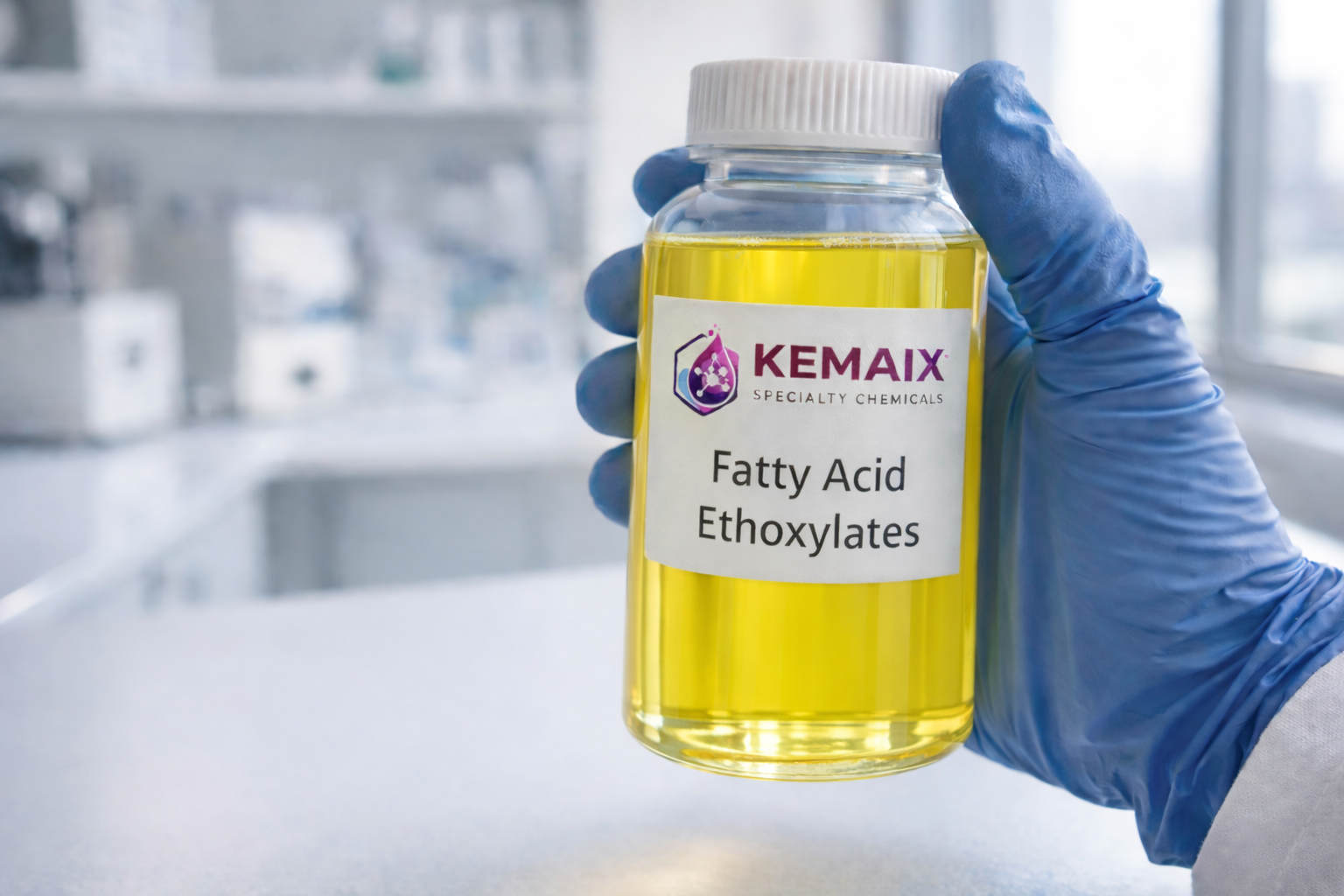
EL is produced by reacting castor oil with ethylene oxide. Because the degree of ethoxylation can be varied widely, a single chemistry spans HLB 6 to 16.5 — from oil-compatible dispersants through to fully water-soluble O/W emulsifiers.
That breadth is why EL turns up across so many industries: one supplier, one chemistry, and a grade for nearly any required HLB. Cloud point moves with EO content too, giving a second selection lever alongside HLB.
- CAS Number61791-12-6
- Chemical NamePolyoxyethylene castor oil ether
- CompositionEthoxylated castor oil
- Ionic TypeNonionic
- HLB Range6 – 16.5
- GradesEL-10, 12, 20, 30, 40, 60, 80
EL Series Technical Specifications
| Grade | Appearance (25°C) | Saponification Value (mgKOH/g) | Cloud Point (°C, 1% aq.) | Moisture (%) | pH (1% aq.) | HLB |
|---|---|---|---|---|---|---|
| EL-10 | Light yellow transparent oil | 110–130 | — | ≤ 1.0 | 5.0–7.0 | 6–7 |
| EL-12 | Light yellow transparent oil | 110–120 | — | ≤ 1.0 | 5.0–7.0 | 6.5–7.5 |
| EL-20 | Light yellow transparent oil | 90–100 | ≤ 30 | ≤ 1.0 | 5.0–7.0 | 9–10 |
| EL-30 | Light yellow viscous oil | 70–80 | ≥ 45 | ≤ 1.0 | 5.0–7.0 | 11.5–12.5 |
| EL-40 | Light yellow viscous oil | 57–67 | 70–84 | ≤ 1.0 | 5.0–7.0 | 13–14 |
| EL-60 | Light yellow waxy solid | — | 85–90 | ≤ 1.0 | 5.0–7.0 | 14–15.5 |
| EL-80 | Light yellow ointment-like solid | 30–40 | 70–80* | ≤ 1.0 | 5.0–7.0 | 15.5–16.5 |
*Cloud point measured under standard conditions. Intermediate ethoxylation degrees available on request.
Where Each Grade Group Belongs
Agrochemical formulation resources: EL-40 pesticide-emulsion stability guide · EC, EW, SC, SE and ME emulsifier selection guide.
EL-10 / 12 / 20
Emulsification and dispersion in textile auxiliaries and industrial systems, where lower HLB and oil compatibility are needed.
EL-30 / 40
Agrochemical formulations, coatings and general emulsification. EL-40 (HLB 13–14) is the workhorse nonionic in many pesticide emulsifier systems.
EL-60 / 80
O/W emulsification, cosmetics and industrial applications requiring high HLB and full water solubility.
Textile & leather
Used as a dispersing and levelling aid alongside AEO grades in dyeing and finishing systems.
Selection & Handling Notes
⚠ HLB and cloud point move together
More EO raises both HLB and cloud point. When selecting, check both against your system — a grade with the right HLB may still be out of solution at your process temperature.
⚠ EC systems usually need an anionic partner
In pesticide emulsifiable concentrates the nonionic EL is normally paired with an anionic co-emulsifier to achieve spontaneous emulsification.
⚠ Solid grades need melting in
EL-60 and EL-80 are waxy or ointment-like. Melt and disperse before emulsification rather than adding directly.
⚠ Validate in hard water
Emulsion stability is graded in standard hard water. Test at your actual dilution water hardness before scale-up.
Packaging, Storage & Shipping
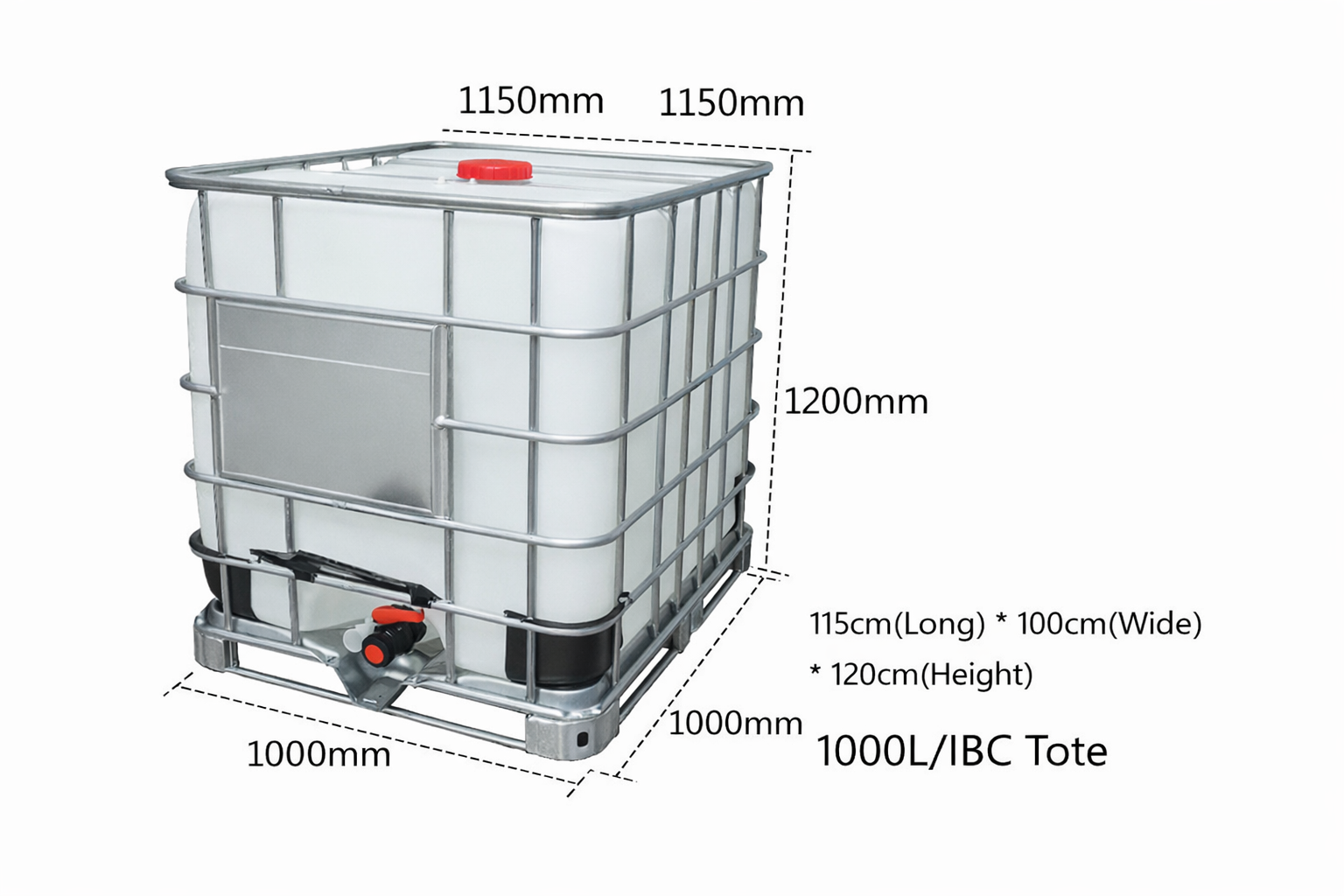
Packaging: 200 kg drums, 1000 kg IBC tanks and bulk. Solid grades supplied in drums or bags with inner liner.
Storage: Cool, dry and well-ventilated conditions with containers kept closed. Shelf life 2 years from date of manufacture.
Shipping: FOB, CIF and CFR as FCL or LCL via Shanghai Port, with TDS, SDS and COA available for customs and customer regulatory review. Confirm REACH registration, Only Representative coverage and intended-use applicability for the specific grade and destination market.
Frequently Asked Questions
For a formulation-matched recommendation, compare the agro-emulsifier range or request the current EL grade TDS and batch COA.
What is ethoxylated castor oil (EL series)?
It is a nonionic surfactant made by reacting castor oil with ethylene oxide. CAS 61791-12-6 is commonly associated with ethoxylated castor oil, but regulatory identity and substance scope must be confirmed for the exact EO range and grade.
What is the EL series used for?
Textile auxiliaries and dispersion (EL-10/12/20), agrochemical formulations and coatings (EL-30/40), and O/W emulsification and cosmetics (EL-60/80).
Which EL grade suits pesticide EC emulsifiers?
EL-40 (HLB 13–14) is a common starting candidate for the nonionic component of an EC emulsifier system, typically screened with an anionic co-emulsifier. Confirm active, solvent, dilution water and stability in the complete formulation.
What HLB range does the EL series cover?
From about 6 (EL-10) to 16.5 (EL-80), providing starting candidates across oil-compatible and more hydrophilic systems; final selection still depends on the complete formulation.
How does cloud point vary across the series?
Typical cloud point rises with EO content, from below 30°C at EL-20 up to 85–90°C at EL-60. Compare values only when the method and test medium are stated, then verify the selected grade in the actual formulation.
Can you supply intermediate ethoxylation degrees?
Intermediate EO targets can be reviewed against manufacturing feasibility. Confirm the agreed HLB, cloud-point method, identity and release limits in the written specification.
Need an EL Grade Matched to Your Required HLB?
Send us your oil phase, process temperature and formulation type — we will recommend the grade, supply TDS and COA, and arrange 200–500 g samples.