
Evidence note: Capacity is a Kemaix company-reported operating metric, reviewed 13 August 2026. Confirm the current ISO certificate and its applicable scope. Sample availability and standard lead time are service targets and must be confirmed in the written quotation.
How Should You Shortlist an Agrochemical Emulsifier?
Definition: An agrochemical emulsifier or formulant is a surfactant component used to help a formulated pesticide wet, disperse, emulsify or remain stable before and after dilution. Selection begins with the formulation code and complete active/solvent system; HLB alone cannot demonstrate performance or regulatory acceptability.
| Formulation type | Primary surfactant task | Starting Kemaix screening route | Required formulation checks |
|---|---|---|---|
| EC / EW / ME | Spontaneous emulsification and dilution stability | 600#, 400# or EL/nonionic-anionic blend screening | Emulsion stability, cream, oil separation, temperature and water hardness |
| SC / SE | Wetting, dispersion and suspension stability | Wetting/dispersant package selected around particle and active | Particle size, suspensibility, viscosity, sediment and redispersibility |
| WP | Rapid wetting and uniform dispersion | BY-series screening with the complete powder package | Wetting time, suspensibility, foam, sieve residue and storage stability |
| SL or aqueous herbicide system | Wetting, compatibility and application performance | 1601#-series or alternative candidate screening | Solubility, electrolyte tolerance, biological performance and local restrictions |
Data basis and limits: Series groupings are based on Kemaix application-screening guidance reviewed 13 August 2026; they do not establish compatibility, efficacy, pesticide registration or approval in any market. Confirm the formulation-specific test plan and current TDS/SDS/COA. The FAO Pesticide Specifications guidance explains that formulation quality specifications cover the active, relevant impurities, physical/chemical properties and storage stability, and that newer FAO/WHO specifications apply only to evaluated manufacturers' products.
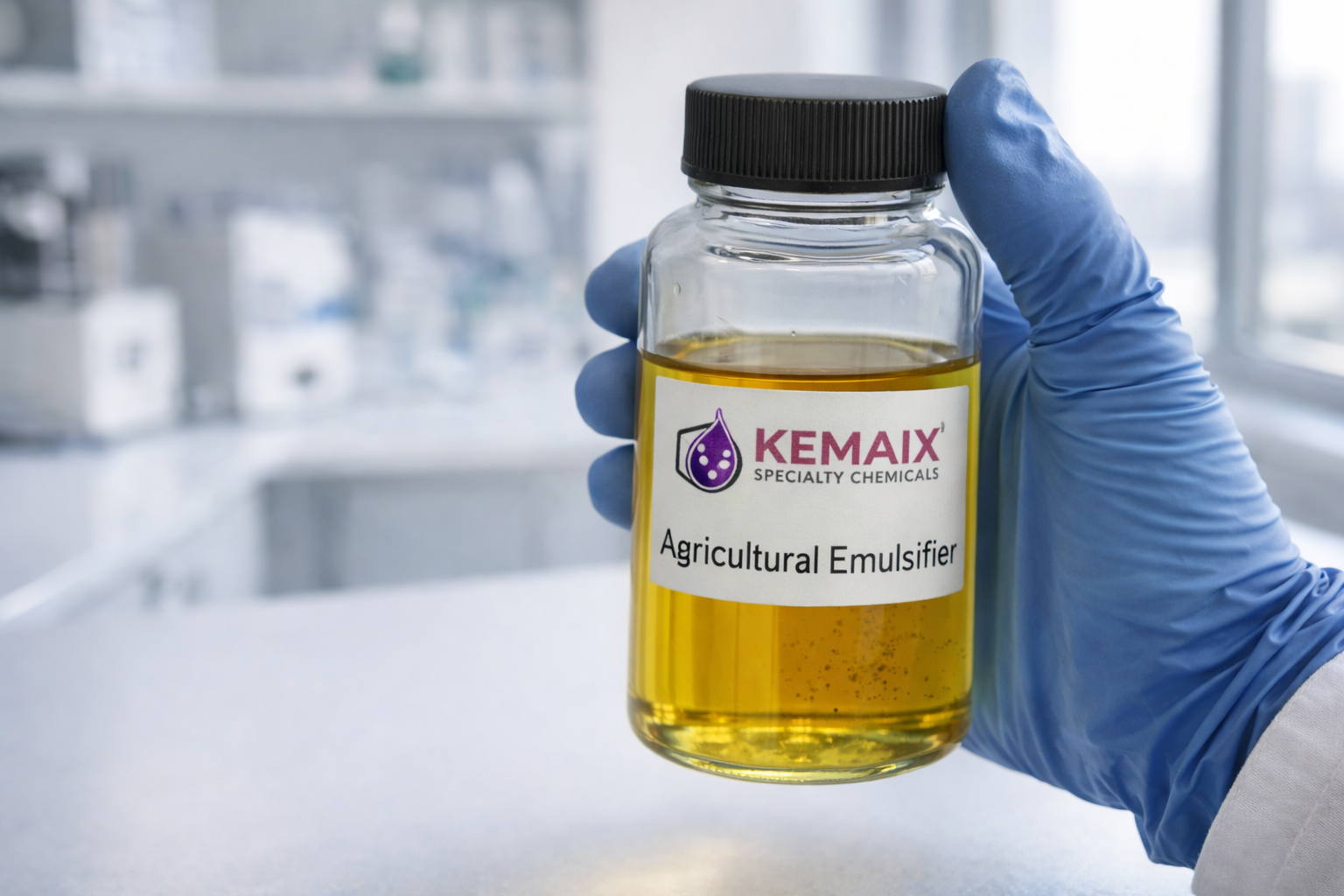
Emulsifiers Matched to the Formulation, Not Sold as One Product
Developing a stable pesticide formulation means controlling surfactant HLB and chemical compatibility precisely. Emulsion separation and poor spontaneous emulsification are two common formulation failures.
The range is organised as screening families: the 600# series and BY series for EC/WP development, the 400# series for pyrethroid-EC candidate screening, and the 1601# series for selected aqueous-herbicide formulation studies. These starting points do not replace complete formulation testing or local registration review.
- Product TypeNonionic agricultural / pesticide emulsifier
- Series600# / BY-110, 120, 130 / 400#, 403# / 1601#, 1602#
- Formulation TypesEC, EW, SC, ME, WP
- SolubilitySoluble in water and organic solvents including methanol, benzene and toluene
- CompatibilityHighly compatible with anionic surfactants for tailored blends
Agricultural Emulsifier Technical Data
| Series | Appearance (25°C) | Cloud Point (°C) | Moisture (%) | HLB |
|---|---|---|---|---|
| 600# Series | Light yellow paste | 60 – 100 | ≤ 0.5 | 12 – 16 |
| BY-110 | Light yellow transparent oily liquid | Saponification: 95 ± 5 | ≤ 0.5 | — |
| BY-120 / 130 | Oily liquid or paste | 75 – 94 | ≤ 0.5 | 10 – 16 |
| 400# / 403# | Light yellow brownish viscous liquid | 66 – 90 | ≤ 0.5 | 12 – 17 |
| 1601# / 1602# | Light yellow paste or liquid | 73 – 79 | ≤ 0.5 | 16 – 16.9 |
Blend ratios are matched to the active ingredient and solvent system. Request a formulation-specific recommendation with your TDS enquiry.
Matched to Your Active Ingredient
600# Series Screening
Candidate nonionics for EC/EW development. Compare spontaneous emulsification, dilution stability, water hardness and storage performance with the complete active/solvent system.
1601# Series Screening
Candidate components for selected aqueous herbicide formulation studies. Confirm solubility, electrolyte tolerance, biological performance and local restrictions.
400# Series Screening
Candidate nonionics for pyrethroid EC development with an anionic partner. Validate the exact active, solvent, dilution water and accelerated storage programme.
BY-110 Screening
A candidate for WP wetting and dispersion studies. Measure wetting time, suspensibility, persistent foam, sieve residue and storage stability.
Selection & Handling Notes
⚠ EC systems need a nonionic + anionic pair
The nonionic emulsifier alone rarely delivers the spontaneous emulsification an EC is graded on. Pair with an anionic such as calcium dodecylbenzene sulfonate and tune the ratio.
⚠ Validate in standard hard water
Emulsion stability is graded in hard water at both low and high dilution. Test at your actual dilution water hardness before scale-up.
⚠ Cold-storage separation is an HLB problem
Nonionics lose hydration as temperature falls, lowering effective HLB. If a formulation fails the 0°C test, shift the blend higher in HLB or add a co-surfactant.
⚠ Residual moisture degrades sensitive actives
We minimise residual moisture and unreacted alcohols precisely because these degrade sensitive active ingredients. Specify the moisture limit you need.
Packaging, Storage & Shipping
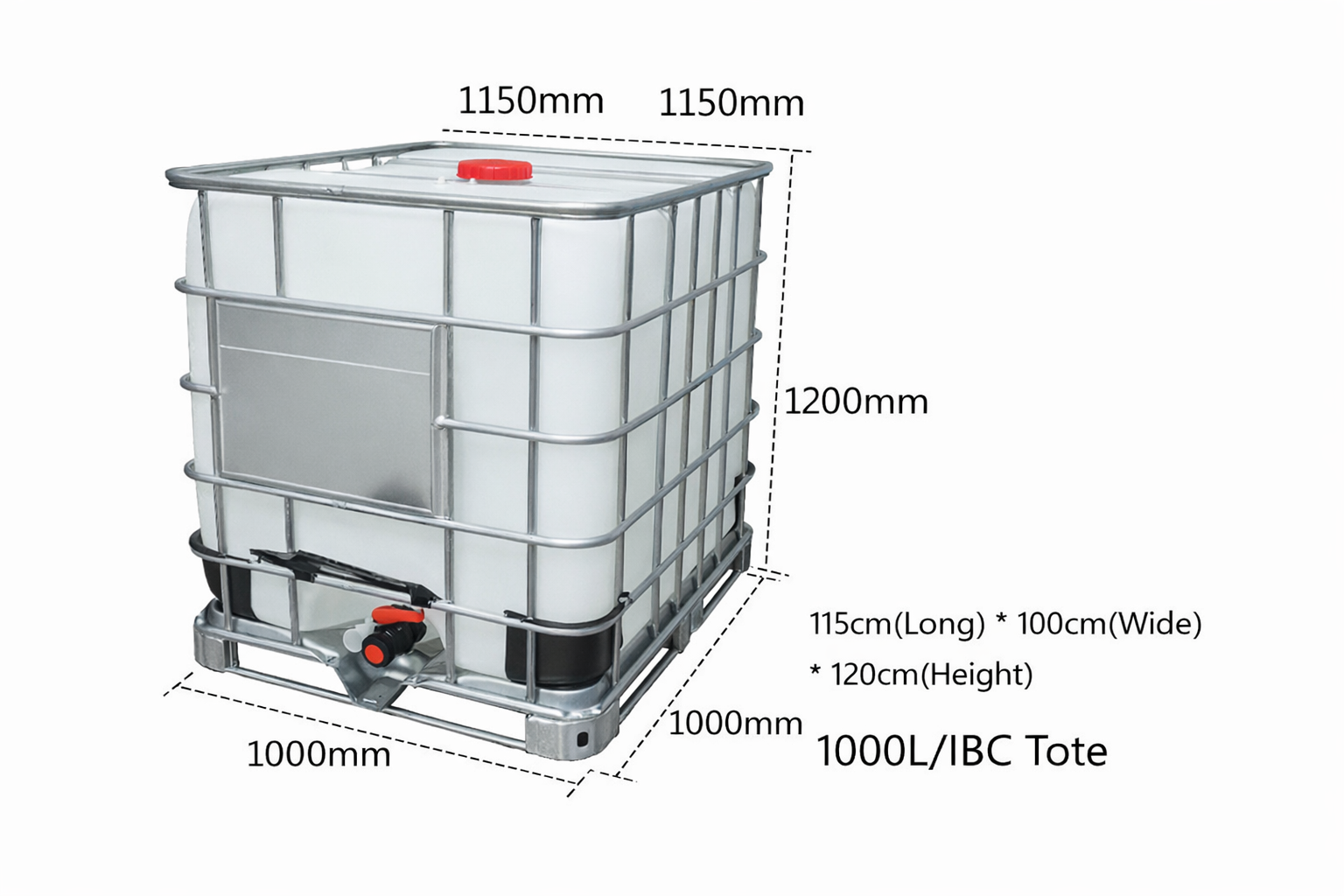
Packaging: 200 kg HDPE drums and 1000 kg IBC tanks, designed to maintain chemical stability during long-distance maritime transit.
Storage: Cool, dry and well-ventilated conditions with containers kept closed. Shelf life 2 years from date of manufacture.
Shipping: FOB, CIF and CFR as FCL or LCL via Shanghai Port, with TDS, SDS and COA available for customs and customer regulatory review. Confirm REACH registration, Only Representative coverage and intended-use applicability for the specific grade and destination market.
Frequently Asked Questions
Technical selection guides: start with the agrochemical surfactants application hub, compare emulsifier selection for EC, EW, SC, SE and ME formulations, then use the HLB selection guide to build the screening range.
What is an agrochemical emulsifier?
It is a surfactant component used to help a formulated pesticide wet, disperse, emulsify or remain stable before and after dilution. Different formulation types — EC, EW, SC, ME and WP — require different performance tests.
Which series suits a pyrethroid EC formulation?
The 400# and 600# series are starting candidates for pyrethroid EC screening. Final selection requires the exact active, solvent, anionic partner, dilution water and storage-stability programme.
Which emulsifier works with glyphosate?
The 1601# series can be screened as a formulation component for selected aqueous herbicide systems. Compatibility, biological performance, local restrictions and the complete registered formulation must be evaluated; the emulsifier page does not establish pesticide approval.
What should I use for wettable powders?
BY-110 is a starting candidate for WP wetting and dispersion screening. Confirm wetting time, suspensibility, persistent foam, sieve residue and storage stability in the complete formulation.
Can Kemaix customise an emulsifier for my active ingredient?
A formulation-specific blend can be reviewed from the active, solvent, formulation type and target tests. Final composition and claims require an agreed test plan and written specification.
Do you provide compatibility data?
Compatibility and hard-water dilution testing can be scoped for a supplied formulation. Confirm the active, solvent, water hardness, method, acceptance criteria and report format before testing.
Dealing With Emulsion Instability?
Tell us your active ingredient, solvent system and formulation type — our technical team will propose a blend, supply TDS and COA, and send 200–500 g samples for your stability trials.