
Evidence note: Production is supported through affiliated facilities with designed annual capacity above 20,000 tons. Designed capacity is not actual annual output, stock or currently available volume. Documents, samples and lead time are confirmed for the selected grade and order.
Which PEG Molecular Weight Should You Choose?
Definition: Polyethylene glycol (PEG, or macrogol) is a water-soluble polyether supplied in grades named by approximate average molecular weight. Increasing molecular weight changes PEG from liquid to paste to solid and generally raises melting point, so selection starts with the physical form and consistency required at the use temperature.
| Required function | Starting grade group | Typical form at 25°C | Validate before scale-up |
|---|---|---|---|
| Solvent, carrier, humectancy or low-viscosity processing | PEG-200 to PEG-600 | Liquid to low-melting material | Viscosity, impurity limits and active compatibility |
| Intermediate consistency or blend adjustment | PEG-800 to PEG-1000 | Paste or waxy material | Storage-temperature texture and blend ratio |
| Binder, solid base or melting-point control | PEG-1500 to PEG-8000 | Waxy solid to solid | Melting range, dissolution, route and applicable monograph |
Data basis and limits: Physical-form and specification ranges are derived from the current Kemaix series specification reviewed 13 August 2026; they are not batch-release limits. Confirm the grade-specific TDS, SDS and COA. For pharmaceutical development, the FDA Inactive Ingredients Database provides route- and dosage-form precedents, but an IID listing does not replace formulation-specific safety, quality or regulatory assessment.
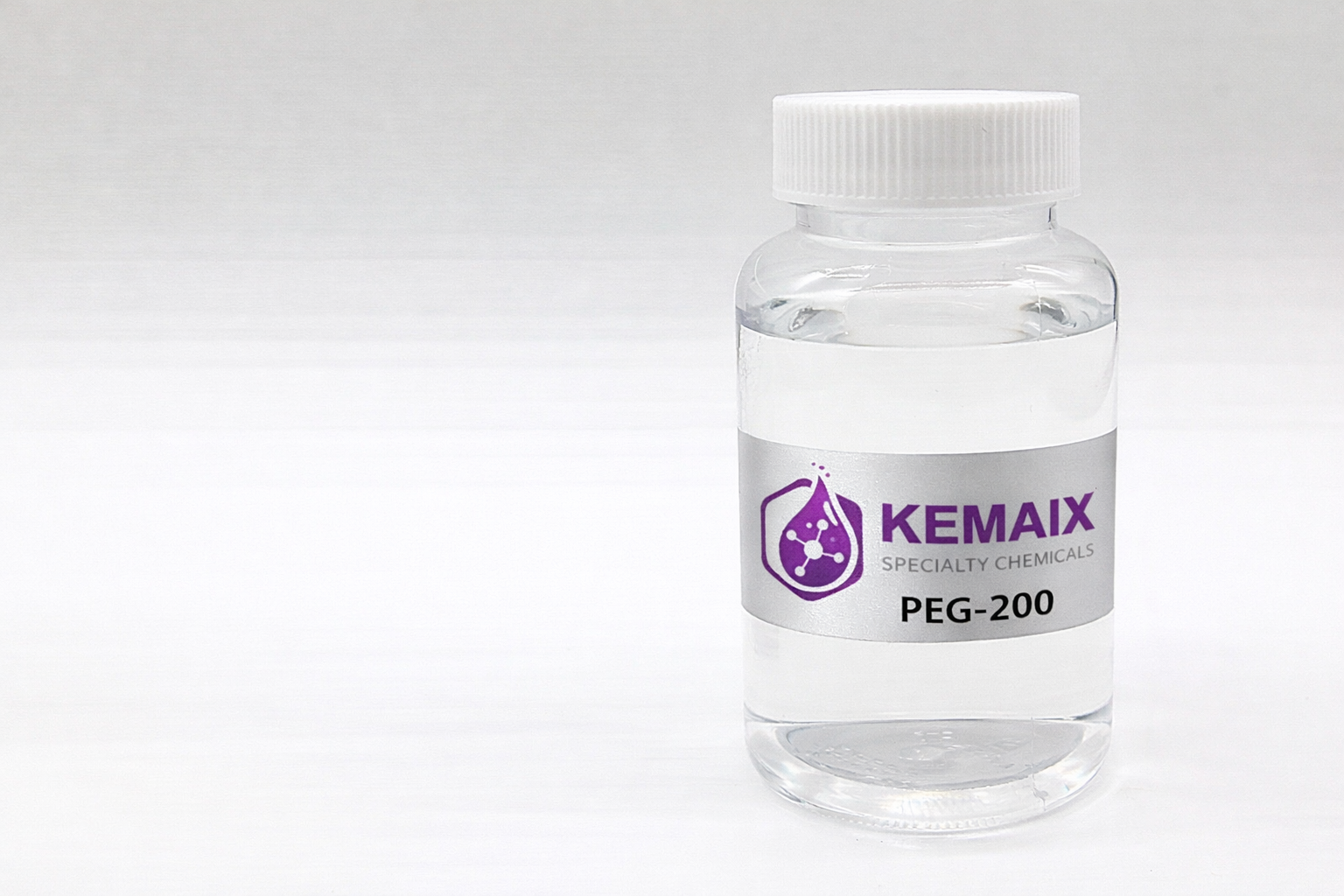
PEG Grades from Liquid Through Solid
PEG, also called macrogol, is a water-soluble polyether available across a wide molecular-weight range. Below about MW 600 it is a clear liquid; as molecular weight rises it becomes a paste and then a solid with a progressively higher melting point.
The liquid-to-solid range supports formulation screening across different process and consistency targets. Confirm grade-specific data, blend behaviour and finished-formulation performance under the intended conditions.
- CAS Number25322-68-3
- Chemical CompositionEthylene oxide condensate
- Molecular Formula(C2H4O)nH2O
- Ionic TypeNonionic polyether
- Standard GradesPEG-200 to PEG-8000
- SolubilityConfirm by grade and formulation
PEG Series Technical Specifications
| Grade | Appearance (25°C) | Color (Pt-Co) | Hydroxyl Value (mgKOH/g) | Molecular Weight | Melting Point (°C) | Moisture (%) | pH (1% aq.) |
|---|---|---|---|---|---|---|---|
| PEG-200 | Colorless transparent liquid | ≤ 20 | 510–623 | 180–220 | — | ≤ 1.0 | 5.0–7.0 |
| PEG-300 | Colorless transparent liquid | ≤ 20 | 340–416 | 270–330 | — | ≤ 1.0 | 5.0–7.0 |
| PEG-400 | Colorless transparent liquid | ≤ 20 | 255–312 | 360–440 | 4–10 | ≤ 1.0 | 5.0–7.0 |
| PEG-600 | Colorless transparent liquid | ≤ 20 | 170–208 | 540–660 | 20–25 | ≤ 1.0 | 5.0–7.0 |
| PEG-800 | Milky white paste | ≤ 30 | 127–156 | 720–880 | 26–32 | ≤ 1.0 | 5.0–7.0 |
| PEG-1000 | Milky white paste | ≤ 40 | 102–125 | 900–1100 | 38–41 | ≤ 1.0 | 5.0–7.0 |
| PEG-1500 | Milky white solid | ≤ 40 | 68–83 | 1350–1650 | 43–46 | ≤ 1.0 | 5.0–7.0 |
| PEG-2000 | Milky white solid | ≤ 50 | 51–63 | 1800–2200 | 48–50 | ≤ 1.0 | 5.0–7.0 |
| PEG-3000 | Solid | ||||||
| PEG-4000 | Solid | ||||||
| PEG-6000 | Solid | ||||||
| PEG-8000 | Solid |
PEG-3000 to PEG-8000 are within the marketed range. Current grade-specific specifications, TDS and available batch COA must be confirmed before selection.
Where PEG Grades Are Used
PEG-200 / 400
Candidate lower-molecular-weight grades for solvent, carrier, humectancy and industrial-formulation screening. Regulated uses require exact-grade, route, destination and document review.
PEG-600 / 800
Candidate grades for lubricant, wetting-agent and textile-auxiliary screening. Confirm physical form, handling and performance in the complete formulation.
PEG-1000 to 2000
Candidate grades for consistency, binding and dispersion screening in industrial systems. Confirm the current grade document and formulation performance.
PEG-3000 and above
Higher-molecular-weight grades for solid-form and consistency screening. Any pharmaceutical, cosmetic or food-related use requires exact-grade, monograph, destination and current-document review.
Selection & Handling Notes
⚠ Blend grades to hit a target consistency
A liquid and solid PEG combination may be evaluated for a target consistency. Confirm exact-grade requirements and validate the ratio, compatibility and storage-temperature behaviour in the complete formulation.
⚠ Control peroxides for sensitive actives
PEG can accumulate peroxides and aldehydes on ageing. Specify low-impurity material and consider antioxidant protection for reactive formulations.
⚠ Check active compatibility
PEG can reduce the activity of certain antibiotics and phenolic preservatives. Verify compatibility before finalising a medicinal base.
⚠ Regulated use needs the right grade
For any proposed regulated use, confirm the exact grade, route, destination-market requirement, applicable monograph and current supporting documents before qualification.
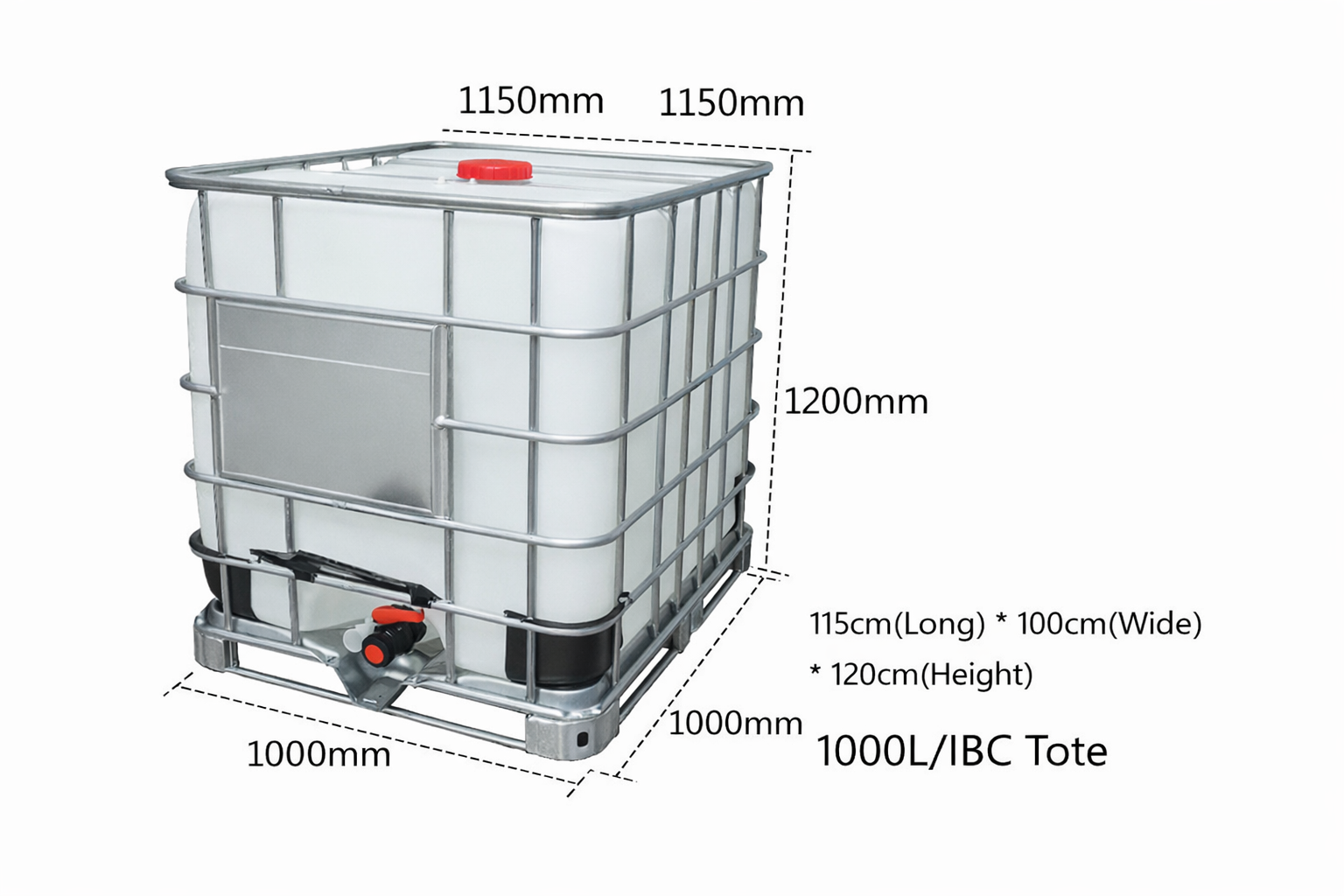
Packaging, Storage & Shipping
Packaging: Packaging is confirmed for the selected PEG grade, physical form, quantity and destination before order acceptance.
Storage: Storage conditions and shelf life must be checked in the current grade-specific TDS and order documents.
Shipping: Shipping terms, route, transport classification and destination-specific documents are confirmed for each order. TDS, SDS or MSDS and batch COA can be provided according to the product and order.
PEG Grade Selection and Procurement Questions
Technical selection guides: PEG as a pharmaceutical excipient: ointment bases, suppositories and solubilizers; PEG vs PPG by water compatibility, physical form, molecular weight and use; and PEG 400 in metalworking fluids: lubricity and mineral-oil comparison.
What is polyethylene glycol (PEG)?
PEG, also called macrogol, is a polyether supplied from lower molecular-weight liquids through pastes to higher molecular-weight solids. Confirm grade-specific physical form, specifications and suitability from current documents and formulation testing.
What is the difference between liquid and solid PEG grades?
Physical form generally changes as molecular weight increases. Use the grade number to create a shortlist, then confirm physical form, melting range and handling requirements in the current grade-specific TDS.
Can Kemaix PEG be used as an ointment base or pharmaceutical excipient?
Kemaix makes no unconditional pharmaceutical-grade claim for this PEG range. Assessment requires the exact grade, intended route of use, applicable monograph, destination-market requirements and current supporting documents. The buyer must complete the required qualification and formulation testing before use.
Is PEG better than PPG for lubrication or defoaming?
Neither family is universally better. Results depend on molecular weight, formulation composition, concentration, temperature and process conditions. Compare candidate grades in the intended system instead of treating lubrication or defoaming performance as a guaranteed property of either family.
Are PEG formulations fully water-soluble and easy to wash off?
Do not assume a universal result from the PEG name alone. Solubility, wash-off behaviour and finished-formulation performance depend on the selected grade and complete formulation. Confirm current grade data and test the actual system under its intended conditions.
Can Kemaix manufacture a PEG grade above PEG 8000?
This page does not promise grades above PEG 8000. Send the target molecular-weight range, required specification, quantity, application and destination for a feasibility review. Kemaix will reply with available options. A feasibility review is not a commitment to manufacture or supply a custom grade.
What documents are available for a PEG order?
TDS, SDS or MSDS and batch COA can be provided according to the selected product and order. State the required document revision, language, regulatory scope and destination-specific requirements in the inquiry. Kemaix will confirm which current files apply before order placement.
Can I request a PEG sample?
Kemaix can provide 200 to 500 g samples with the corresponding COA, subject to the selected grade, current availability, destination and project review. Confirm the terms before planning laboratory work. Sample availability does not guarantee bulk stock or a production lead time.
Request PEG Grade Review, Documents and Quotation
Send the target function, process conditions, preferred PEG grade or molecular-weight range, quantity, destination market and required documents. Kemaix will confirm available grade options, document scope, sample terms, packaging, current lead time and quotation basis.