
Direct answer: Use ASTM D1173 to compare foam generation and persistence, ASTM D2281 to compare wetting speed, and ASTM D2024 to determine the cloud point of nonionic surfactants. Results are comparable only when concentration, temperature, water quality and timing are controlled. Technical review: Grace Dou · Last reviewed 13 August 2026.
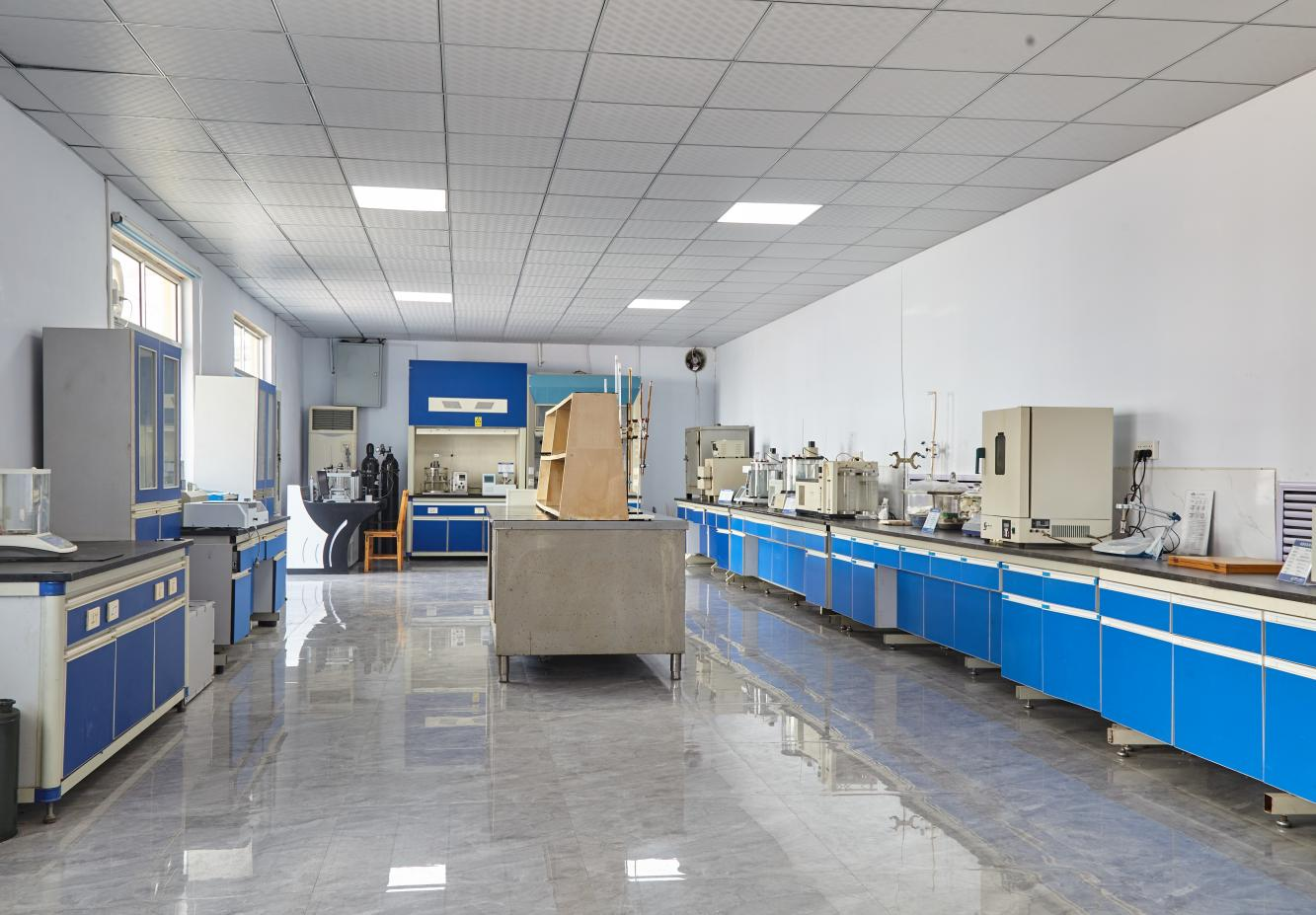
Every claim about foam, wetting or stability traces back to a specific measurement procedure.
“Low Foam” Means Nothing Without a Method
Supplier datasheets are full of claims like low foaming, fast wetting and excellent stability. None of them mean anything until you know how the number was produced — at what concentration, at what temperature, and against which standard.
This guide walks through the five measurements that decide most surfactant and defoamer selections, what each one actually tells you, and the mistakes that make results unreproducible. If you can read these five, you can read almost any technical datasheet critically.
Five Measurements That Decide a Selection
Ross-Miles Foam Height Analysis
A defined volume of surfactant solution is dropped from a fixed height into a column containing more of the same solution. Foam height is recorded immediately after the drop, then again after a set interval — commonly five minutes.
Cloud Point Determination
A dilute aqueous solution, typically 1%, is heated slowly with stirring until it turns turbid. The temperature at which turbidity first appears is the cloud point — the moment the ethylene-oxide chains dehydrate and the surfactant separates from solution.
Draves Wetting Speed
A weighted cotton skein is dropped into the surfactant solution and the time taken to sink is recorded in seconds. Faster sinking means the solution displaces air from the fibre more quickly.
HLB Mapping & Required HLB Determination
A series of emulsions is prepared using blends of a low-HLB and a high-HLB surfactant at incrementally different ratios. Each is assessed for stability, and the blend that performs best identifies the required HLB of the oil phase.
Freeze-Thaw & Accelerated Stability Testing
The formulation is cycled through low temperature and back to ambient, repeatedly, and inspected for separation, crystallisation or viscosity change. Elevated-temperature storage is used in parallel to accelerate ageing.
Which Test Answers Which Question
| Your question | Test to run | What a good result looks like |
|---|---|---|
| Will this foam in my CIP loop? | Ross-Miles at process temperature | Low initial height, and near-zero at five minutes |
| Which defoamer knocks foam down fastest? | Ross-Miles with timed dosing | Steep collapse curve immediately after dosing |
| Will my defoamer still work at 90 °C? | Cloud point determination | Cloud point below your process temperature |
| Will this ethoxylate stay in solution? | Cloud point in the full formulation | Cloud point comfortably above process temperature |
| Which scouring agent wets fastest? | Draves sinking time | Shortest time in seconds under identical conditions |
| What emulsifier ratio should I use? | HLB mapping series | A clear stability peak identifying the required HLB |
| Will it survive shipping in winter? | Freeze-thaw cycling | No separation or crystallisation after repeated cycles |
| Will my emulsion cream in storage? | Particle size distribution | Fine, narrow distribution without a coarse tail |
All of the above are run in the Kemaix laboratory on customer formulations, not only on raw material.
Four Mistakes That Make Results Meaningless
⚠ Testing in water instead of the formulation
Electrolytes, builders and solvents all shift behaviour. Salts depress cloud point; hardness ions destabilise emulsions. A clean water result can be several degrees or several percent away from reality.
⚠ Testing at the wrong temperature
Polyether defoamers become more effective above their cloud point. Running a foam test at 25 °C for a process that operates at 85 °C can reject the grade that would have worked best.
⚠ Comparing values measured differently
Cloud point depends on concentration; foam height depends on drop height and column geometry. Two supplier datasheets are only comparable if both cite the same standard and conditions.
⚠ Confusing knockdown with persistence
These are separate properties measured at different points in the same test. A grade that collapses foam instantly may fade within the hour — a problem in a 100-hour fermentation, irrelevant in a batch wash.
Frequently Asked Questions
What is the Ross-Miles foam test?
It measures foaming by dropping a surfactant solution from a fixed height into a column of the same solution, then recording foam height immediately and after a set interval, commonly five minutes. The initial reading indicates how readily the solution foams; the later reading indicates stability. Described in ASTM D1173.
How is the cloud point of a nonionic surfactant measured?
A dilute solution, typically 1%, is heated slowly until turbidity appears, and that temperature is recorded. Because the value depends on concentration and on electrolytes present, compare only samples measured the same way — and ideally measure in your actual formulation.
What does the Draves wetting test measure?
How quickly a surfactant solution wets a standard cotton skein, recorded as the time in seconds for the weighted skein to sink. Shorter time means faster wetting — the decisive property for scouring agents, penetrants and spray adjuvants. Described in ASTM D2281.
How do you evaluate a defoamer in the laboratory?
On two separate properties: knockdown (how fast it collapses existing foam) and persistence (how long it suppresses foam from returning). Both come from generating foam under controlled conditions, dosing, and recording height against time — at the actual process temperature, since polyether defoamers become more effective above their cloud point.
Why test in the formulation rather than in water?
Electrolytes, builders, solvents and the active ingredient all shift surfactant behaviour. Salts lower cloud point, hardness ions affect emulsion stability, and other components compete at the interface. A deionised-water result can differ substantially from performance in the finished product.
Can Kemaix run these tests on my formulation?
Yes. Our laboratory runs surface and interfacial tension, cloud point, HLB mapping, Ross-Miles foam analysis, Draves wetting, emulsion particle size distribution, freeze-thaw stability and acid/alkali stability trials — and can synthesise a trial grade where no standard product fits.
Send Us the Problem, Not Just the Product Code
Describe the failure you are seeing — foam carryover, cold-storage separation, slow wetting — and our engineers will propose a test plan, run it on your formulation, and return the data with a grade recommendation.

Grace Dou is a technical content reviewer at Nanjing Kemaix Advanced Materials Co., Ltd., focusing on EO/PO derivatives, nonionic surfactants, formulation scope, test conditions and documentation boundaries. Final grade selection should use current specifications and finished-formula testing.
Related Kemaix Resources
External References
- ASTM D1173 — Foaming Properties of Surface-Active Agents
- ASTM D2281 — Evaluation of Wetting Agents by the Skein Test
- ASTM D2024 — Cloud Point of Nonionic Surfactants
- ISO 1065 — Determination of Cloud Point
- ISO 4320 — Determination of Cloud Point by Volume Phase Method
- Peer-reviewed research on nonionic surfactant cloud-point behaviour
