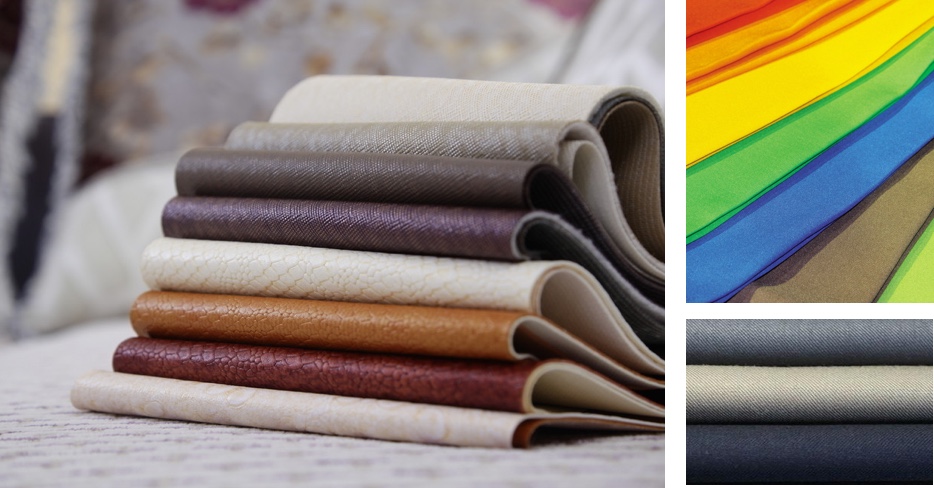
JFC Surfactant Penetrant: Achieving Fast Wetting in Textile and Leather Processing

In the wet processing of textiles and leather, the ability of a surfactant to rapidly penetrate dense fiber structures is critical for subsequent scouring, dyeing, and finishing stages. JFC Surfactant Penetrant, a specialized fatty alcohol ethoxylate, has long been established as the industrial standard for applications requiring high-efficiency wetting and emulsification, particularly in low-to-medium temperature ranges.

Optimizing the wetting speed directly impacts processing time, energy consumption, and the uniformity of chemical application. This technical guide analyzes the performance criteria of JFC and its strategic selection in mature industrial sectors.

JFC Surfactant Penetrant industrial wetting for textile scouring and leather degreasing

1. Technical Specification Baseline of JFC Surfactant Penetrant

The effectiveness of JFC Surfactant Penetrant is derived from its specific degree of ethoxylation, resulting in a slightly lipophilic HLB value. This allows the molecule to quickly lower the interfacial tension between aqueous solutions and hydrophobic substrates like wax, grease, or natural oils.

Technical Parameter Standard Specification Range Application Implication
Active Content ≥ 99% (Water < 1.0%) High-purity concentrate for formulation stability.
HLB Value (Approx.) 11.5 – 12.5 Optimized for wetting and emulsification rather than high-foaming detergency.
Cloud Point (1% aq.) 40°C – 50°C Critical application temperature range; maximum penetration occurs near the cloud point.
pH Value (1% aq.) 5.5 – 7.5 Neutral pH, compatible with sensitive fibers and leather collagen.
Wetting Time (0.1% aq., 25°C) < < 10 Seconds The core performance indicator for rapid processing.

2. Strategic Applications in Textile Scouring

The primary challenge in textile pre-treatment, especially for natural fibers like cotton and flax, is the rapid removal of hydrophobic natural waxes and pectins.

Fundamental Scouring Agent

JFC Surfactant Penetrant is a cornerstone of effective scouring formulations. Its balanced HLB profile allows it to penetrate the complex wax layers, emulsifying the trapped fatty acids and lifting them into the aqueous phase for permanent removal.

💡 Energy Efficiency Factor

JFC maintains exceptional efficiency in neutral to moderately alkaline environments. Its ultra-rapid wetting capability allows for continuous processing at energy-efficient temperatures of 40°C–60°C, drastically reducing the operational costs associated with high-temperature linear ethoxylates.

3. Critical Degreasing in Leather Processing

Achieving non-greasy, consistent hides requires a powerful emulsification system.

Deep Corium Penetration

Natural animal fats must be removed from the dense collagen network to prevent spew and odor. JFC Surfactant Penetrant excels here, leveraging its unique lipophilic hydrophobe for deep penetration into the corium (the hide’s dense center). It quickly solubilizes fats, preventing their redeposition and ensuring a “clean” feel.

❄️ Consistent Low-Temp Stability

Leather processing often requires lower temperatures to preserve the hide’s collagen structure. JFC retains its superior wetting power and emulsification stability even in cooler floats, ensuring consistent and complete grease removal batch after batch.

4. Technical Insight: Ensuring Batch Consistency

The Critical Procurement Pain Point

The single most common complaint regarding JFC Surfactant Penetrant is inconsistency in wetting speed across different batches. Even a 5-second variance is enough to disrupt continuous textile processing lines or cause incomplete leather degreasing.

🛡️ The KEMAIX Quality Solution

At KEMAIX, we address this critical operational pain point through rigid manufacturing controls. By utilizing specialized narrow-range ethoxylation catalysts, we ensure a highly consistent distribution of Ethylene Oxide (EO) on the fatty alcohol hydrophobe.

Our precision engineering keeps the wetting speed fluctuation within a strict ±10% range of the standard specification. This level of reliability allows formulators to utilize KEMAIX JFC without adjusting their recipes for every incoming shipment.

🎯 Conclusion: Precision Wetting for Scalable Production

The established reputation of JFC Surfactant Penetrant as the “King of Penetrants” in the textile and leather sectors is not merely marketing hyperbole; it is a direct reflection of its specific chemical optimization for challenging, hydrophobic substrates. For high-volume manufacturers operating automated lines, the consistency of this wetting power is paramount to maintaining quality and controlling operational costs.

Need to guarantee the wetting speed of your incoming raw materials?

By selecting KEMAIX as your trusted source for JFC, you are selecting a manufacturing partner that understands the technical realities of your production floor. We provide the strict batch-to-batch consistency and comprehensive analytical data necessary to scale your operations with confidence.

* Bulk sourcing available in 200kg drums and 1000kg IBC tanks. All shipments accompanied by a detailed Certificate of Analysis (COA).

❓ Technical FAQ: JFC Surfactant Penetrant in Application

Q1: Is JFC Surfactant Penetrant suitable for high-temperature dyeing processes?

A: JFC is a low-to-medium temperature surfactant. Its cloud point is typically 40°C–50°C, meaning its maximum penetration and emulsification occur within this range. While it can be used as a leveling agent in dyeing, its performance decreases significantly as the temperature exceeds its cloud point. For high-temperature (e.g., 100°C+) polyester dyeing, a higher ethoxylate or specialized polyester leveling agent is recommended.

A: In terms of function, JFC can often replace NP-10 in textile scouring and leather degreasing due to its fast wetting. However, JFC (AEO series) and NP-10 (APEO series) have different molecular packing and interfacial behavior. NP-10 is a “universal” emulsifier with an HLB of 13.3, while JFC is specialized for wetting with an HLB of ~12. We highly recommend a formulation check and stability test when transitioning from NP-10 to JFC, as the required dosage may differ.

A: As a non-ionic surfactant, JFC is chemically stable across a wide pH range (pH 2 to 12). Its maximum wetting and emulsification efficiency is typically achieved in the neutral to moderately alkaline range (pH 6.5 to 9.5), which is ideal for most textile scouring and leather degreasing floats.

A: JFC Surfactant Penetrant is a moderate-foaming surfactant. In applications involving high agitation (such as continuous scouring lines), foam can be generated. In such cases, it is standard practice to incorporate a defoamer into the scouring formulation or to blend JFC with a specialized low-foam non-ionic surfactant.

Picture of Grace Dou

Grace Dou

Specialist in EO/PO Derivatives & Surface Chemistry. With 10+ years of experience in chemical export and formulation optimization at Kemaix, Grace provides technical insights to help global clients achieve superior emulsification stability.

Need Free Samples for Testing?

Get professional technical support and free samples for your chemical formulations.

Get Samples Now
Scroll to Top