
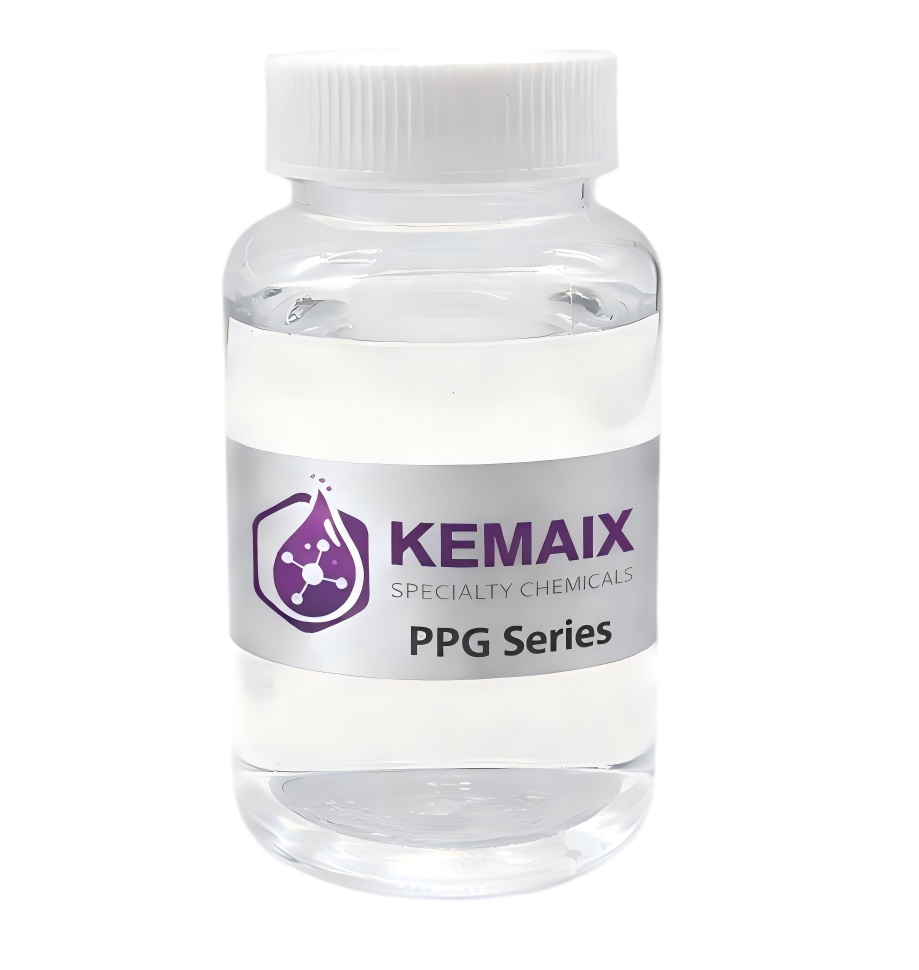
More Hydrophobic Than PEG — and That's the Point
PPG is the propylene-oxide counterpart to PEG. Swapping EO for PO makes the chain markedly more hydrophobic, and at higher molecular weights PPG becomes largely water-insoluble.
That is exactly what makes it useful where PEG is not: as a lubricant in oil-based systems, a defoamer in aqueous ones, and a dispersant in coatings. It is also the hydrophobic core of every EO/PO block copolymer we make.
- CAS Number25322-69-4
- Chemical CompositionPropylene oxide condensate
- Ionic TypeNonionic polyether
- Standard GradesPPG-200 to PPG-8000
- AppearanceColorless transparent viscous liquid
- SolubilityDecreasing water solubility with rising molecular weight
PPG Series Technical Specifications
| Grade | Appearance (25°C) | Color (Pt-Co) | Hydroxyl Value (mgKOH/g) | Molecular Weight | Acid Value (mgKOH/g) | Moisture (%) | pH (1% aq.) |
|---|---|---|---|---|---|---|---|
| PPG-200 | Colorless transparent viscous liquid | ≤ 20 | 510–623 | 180–220 | ≤ 0.5 | ≤ 0.5 | 5.0–7.0 |
| PPG-400 | Colorless transparent viscous liquid | ≤ 20 | 255–312 | 360–440 | ≤ 0.5 | ≤ 0.5 | 5.0–7.0 |
| PPG-600 | Colorless transparent viscous liquid | ≤ 20 | 170–208 | 540–660 | ≤ 0.5 | ≤ 0.5 | 5.0–7.0 |
| PPG-1000 | Colorless transparent viscous liquid | ≤ 20 | 102–125 | 900–1100 | ≤ 0.5 | ≤ 0.5 | 5.0–7.0 |
| PPG-1500 | Colorless transparent viscous liquid | ≤ 20 | 68–83 | 1350–1650 | ≤ 0.5 | ≤ 0.5 | 5.0–7.0 |
| PPG-2000 | Colorless transparent viscous liquid | ≤ 20 | 51–63 | 1800–2200 | ≤ 0.5 | ≤ 0.5 | 5.0–7.0 |
| PPG-3000 | Colorless transparent viscous liquid | ≤ 20 | 34–42 | 2700–3300 | ≤ 0.5 | ≤ 0.5 | 5.0–7.0 |
| PPG-4000 | Colorless transparent viscous liquid | ||||||
| PPG-8000 | Colorless transparent viscous liquid |
PPG-4000 and PPG-8000 are supplied as standard grades; grade-specific parameters are issued with the TDS and COA on request.
Where PPG Grades Are Used
PPG-200 / 400 / 600
Lubricants, defoaming agents and dispersants in coatings and industrial systems, where low viscosity and oil compatibility matter.
PPG-1000 / 1500
Lubricants, hydraulic fluids and heat transfer systems benefiting from higher viscosity and thermal stability.
PPG-2000 / 3000 and above
Metalworking fluids, rubber processing and high-temperature lubrication.
Defoaming
PPG is a common base for polyether defoamers. For formulated foam control, see our polyether defoamer range.
Selection & Handling Notes
⚠ Water solubility falls with molecular weight
Low-MW PPG is partly water-miscible; high-MW grades are largely insoluble. Confirm behaviour at the grade you specify, not the family.
⚠ Food-contact use needs a specific grade
Standard industrial PPG is intended for coatings, hydraulic and rubber applications. For food-contact requirements, contact our technical team for compliant grades.
⚠ Match viscosity to the system
Viscosity rises sharply with molecular weight. Over-specifying MW can cause pumping and dispersion problems in the finished fluid.
⚠ Control moisture in sealed systems
Keep containers closed. Moisture pick-up affects performance in hydraulic and heat-transfer duty.
Packaging, Storage & Shipping
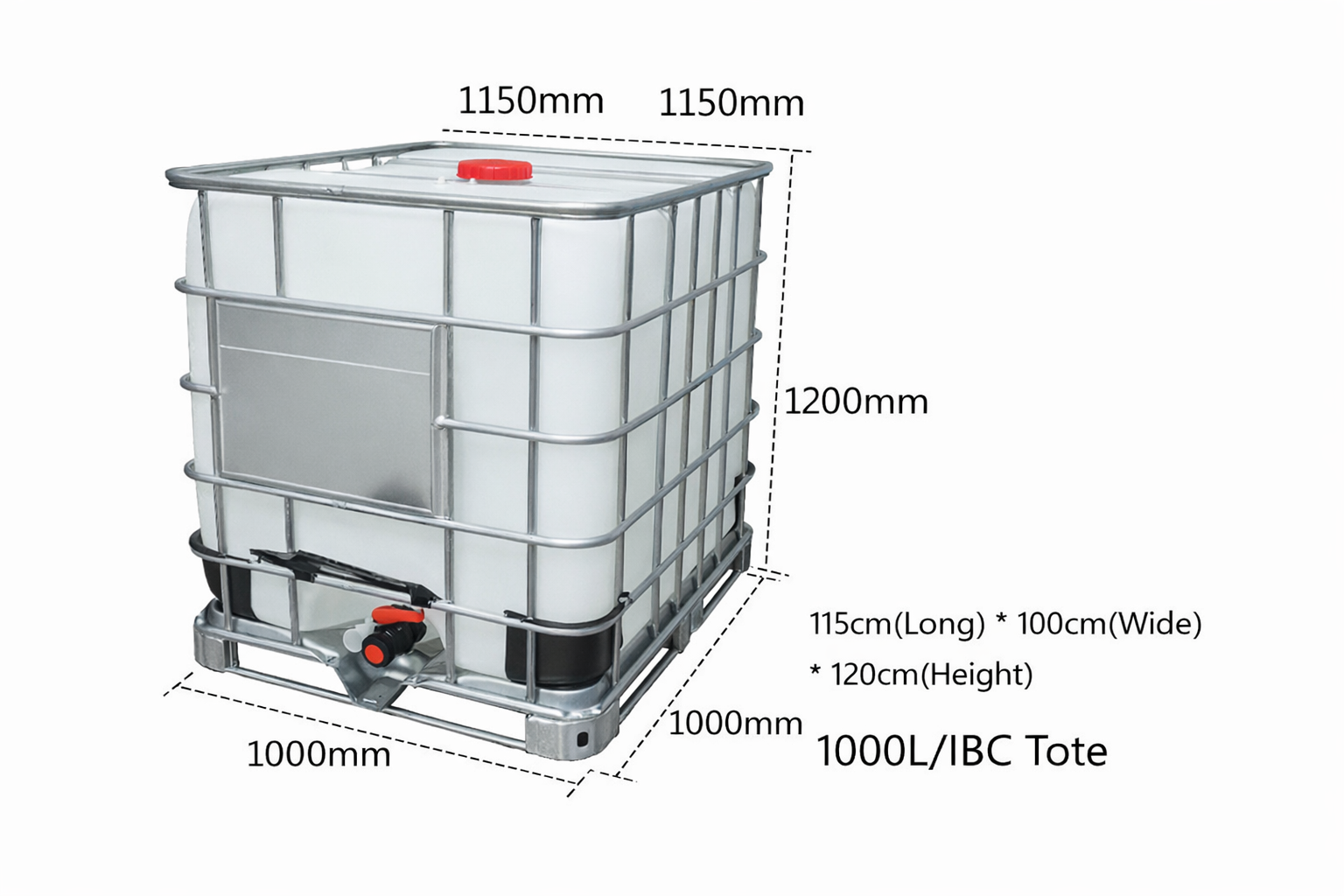
Packaging: 200 kg drums, 1000 kg IBC tanks and bulk. Non-hazardous for general transportation.
Storage: Cool, dry and well-ventilated conditions with containers kept closed. Shelf life 2 years from date of manufacture.
Shipping: FOB, CIF and CFR as FCL or LCL via Shanghai Port, with TDS, MSDS and COA supplied for customs clearance and REACH filing.
Frequently Asked Questions
What is polypropylene glycol (PPG)?
PPG is a polyether of propylene oxide supplied as viscous liquids from PPG-200 upward. It is more hydrophobic than PEG and is used as a lubricant, defoamer and dispersant.
What is the main difference between PPG and PEG?
PEG is highly hydrophilic and water-soluble across its range. PPG is less water-soluble at higher molecular weights and offers superior lubricity and defoaming for oil-based applications.
Can PPG be used as a defoamer in food processing?
Our industrial-grade PPG is intended for coatings, hydraulic oils and synthetic rubber. For food-grade requirements, contact our technical team for specific compliant grades.
What is PPG used for in metalworking fluids?
Higher-MW grades provide high-temperature lubrication and foam control in cutting and grinding fluids, where clean carryover and thermal stability are required.
Do you support custom viscosity or molecular weight blends?
Yes. We offer custom synthesis and processing for special PPG grades beyond the standard range.
What free sample size is available?
We supply 200–500 g free samples for laboratory evaluation, with the corresponding COA.
Need a Specific PPG Molecular Weight or Viscosity?
Tell us the application, viscosity target and volume — we will recommend the grade, supply TDS and COA, and send 200–500 g samples for trials.