
Evidence note: Capacity is a Kemaix company-reported operating metric, reviewed 13 August 2026. Confirm the current ISO certificate and its applicable scope. Sample availability and standard lead time are service targets and must be confirmed in the written quotation.
Which EO/PO Block Polyether Should You Start With?
Definition: EO/PO block polyethers are nonionic copolymers built from hydrophilic ethylene-oxide and hydrophobic propylene-oxide blocks. Block size and EO percentage determine HLB, physical form, cloud point, foam behaviour and water compatibility; the trade grade must not be assumed equivalent to a pharmacopeial poloxamer solely from a similar name.
| Selection need | Starting family | Why it fits | Validate before scale-up |
|---|---|---|---|
| Low-foam detergency or foam-control screening | Low-HLB L grades | Liquid form and greater PO-driven hydrophobicity | Cloud point, minimum effective dose and downstream compatibility |
| Intermediate wetting, dispersion or process aid | P grades and mid-HLB L grades | Balanced EO/PO character and paste/liquid form | Dissolution, viscosity, temperature and electrolyte effects |
| High-EO wetting or shear-protection screening | F38 / F68-type grades | High HLB and solid form | Exact identity, molecular weight, purity and application-specific qualification |
Data basis and limits: Grade groupings and typical properties are derived from the current Kemaix series specification reviewed 13 August 2026; they are not batch-release limits or evidence of pharmacopeial equivalence. Confirm the grade-specific TDS, SDS and COA. For drug-product development, the FDA Inactive Ingredients Database provides route- and dosage-form precedents; an IID entry does not approve a supplier's grade or replace compendial, safety and formulation review.
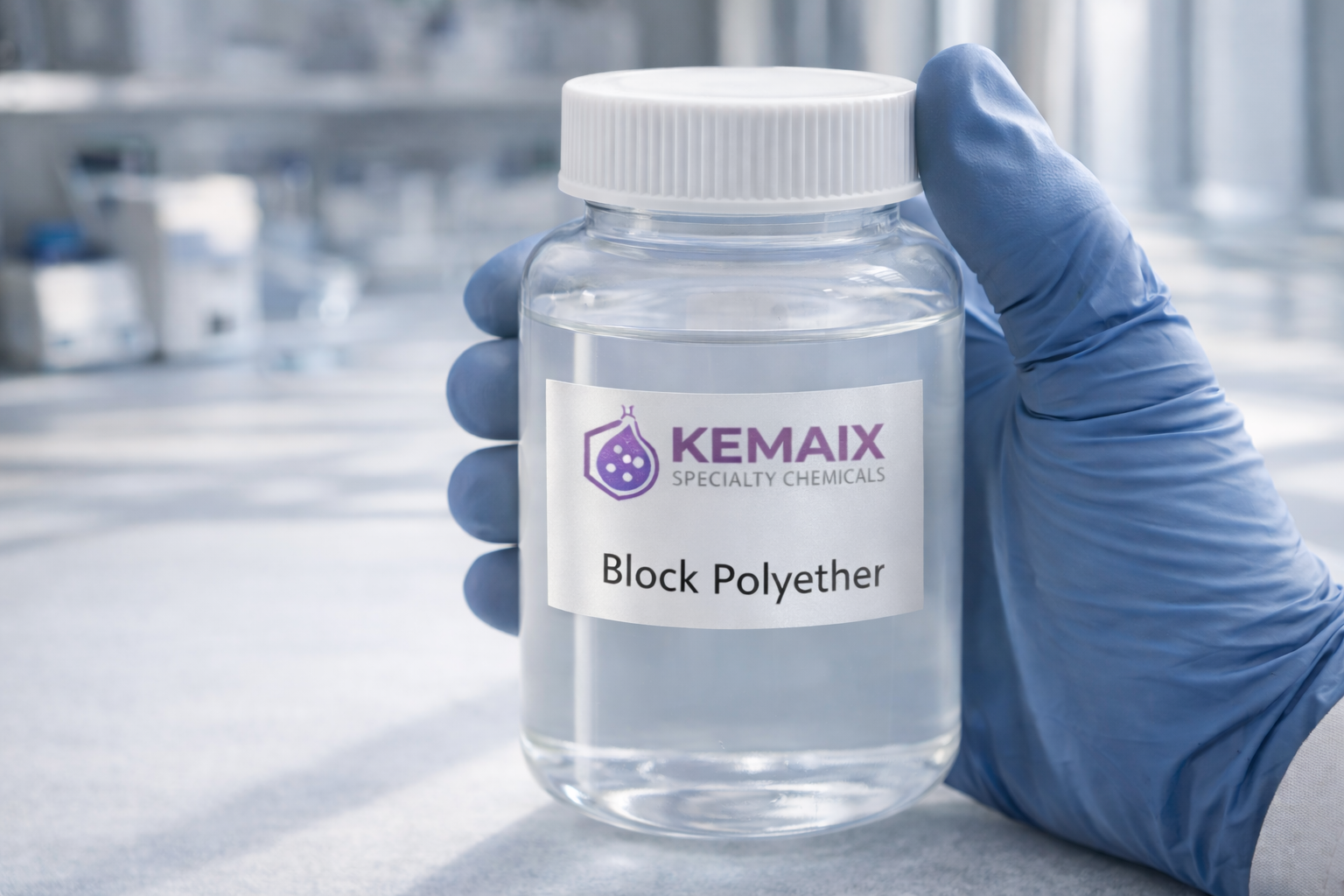
Two Blocks, One Dial, Thirty Points of HLB
Block polyethers — also called poloxamers or Pluronic-type copolymers — are EO-PO-EO triblock structures. A hydrophobic polypropylene-oxide core sits between two hydrophilic polyethylene-oxide ends.
Changing the size of those blocks moves HLB from 3 to 30 and changes the same chemistry into a foam-control agent, low-foam surfactant, dispersant or high-EO wetting/shear-protection candidate. The L series is liquid, P is paste and F is flake or solid; regulated use requires exact identity and grade qualification.
- CAS Number9003-11-6
- INCI NamePoloxamer
- StructureEO-PO-EO block copolymer
- Ionic TypeNonionic
- HLB Range3 – 30
- SeriesL (liquid) / P (paste) / F (flake or solid)
Block Polyether Technical Specifications
| Grade | Appearance (25°C) | Avg. Molecular Weight | Viscosity (25°C, mPa·s) | Cloud Point (°C, 1% aq.) | Melting Point (°C) | Moisture (%) | pH (1% aq.) | HLB |
|---|---|---|---|---|---|---|---|---|
| L31 | Colorless transparent liquid | 1100 | 200 | 37 | — | ≤ 1.0 | 5.0–7.0 | 3.5 |
| L35 | Colorless transparent liquid | 1900 | 320 | 70–85 | — | ≤ 1.0 | 5.0–7.0 | 18.5 |
| F38 | White solid | 5000 | — | > 100 | 45 | ≤ 1.0 | 5.0–7.0 | 30 |
| L42 | Colorless transparent liquid | 1630 | 250 | 37 | — | ≤ 1.0 | 5.0–7.0 | 8 |
| L43 | Colorless transparent liquid | 1850 | 310 | 42 | — | ≤ 1.0 | 5.0–7.0 | 10 |
| L44 | Colorless to light yellow liquid | 2200 | 140–190 | 45–60 | — | ≤ 0.5 | 5.0–7.0 | 12 |
| L45 | Colorless transparent liquid | 2400 | — | 75–85 | — | ≤ 1.0 | 5.0–7.0 | 15 |
| L61 | Colorless to light yellow liquid | 2000 | 100–150 | 35–45* | — | ≤ 0.5 | 5.0–7.0 | 3 |
| L62 | Colorless to light yellow liquid | 2500 | 180–230 | 35–45* | — | ≤ 0.5 | 5.0–7.0 | 7 |
| L63 | Colorless to light yellow liquid | 2650 | 550 | 34 | — | ≤ 1.0 | 5.0–7.0 | 11 |
| L64 | Colorless to light yellow liquid | 2900 | 200–250 | 55–65 | — | ≤ 0.5 | 5.0–7.0 | 13 |
| P65 | Milky white paste | 3500 | — | 75–85 | 29.5 | ≤ 1.0 | 5.0–7.0 | 15 |
| F68 | White solid | 8350 | — | > 100 | 50 | ≤ 1.0 | 5.0–7.0 | 29 |
*Cloud point measured under standard conditions. F68 is Poloxamer 188. Custom EO/PO ratios and molecular weights available.
Application guide: See how Poloxamer 188 (F68) protects cell culture and fermentation processes from shear.
Metalworking guide: Compare poloxamers and PPG in synthetic cutting-fluid formulations for lubrication, detergency and foam control.
Where Block Polyethers Are Used
Low-Foam Detergency & Foam Control
Low-HLB L grades are candidates for detergency and foam-control screening. Match cloud point and dose to the actual process and verify downstream compatibility.
High-EO Wetting & Shear Protection
F-series solids can be screened for wetting, dispersion and shear-protection functions. Regulated use requires exact poloxamer identity, compendial grade and route-specific documentation.
Industrial Lubrication & Textiles
Mid-range grades can be evaluated as formulation aids in metalworking and textile systems. Confirm lubricity, antistatic performance, bath compatibility and dosage in controlled trials.
Dispersants, Coatings & Oilfield
Selected grades can be screened for wetting, emulsion polymerization, dispersion or demulsification. Performance is formulation-specific and requires the relevant laboratory method.
Selection & Handling Notes
⚠ Match the series letter to the job
L series liquids and high-EO F series solids have very different HLB, physical form and process behaviour. Substituting across series requires fresh formulation testing.
⚠ Cloud point drives foam-control behaviour
Compare cloud point only under a stated method and medium, then verify performance at the actual process temperature.
⚠ Pharmaceutical use needs exact identity
A similar trade code does not establish equivalence to a compendial poloxamer. Confirm molecular architecture, purity, monograph, route and supplier documentation.
⚠ Dose antifoam to the minimum effective level
Over-dosing wastes product and, in aerated biological systems, can reduce oxygen transfer.
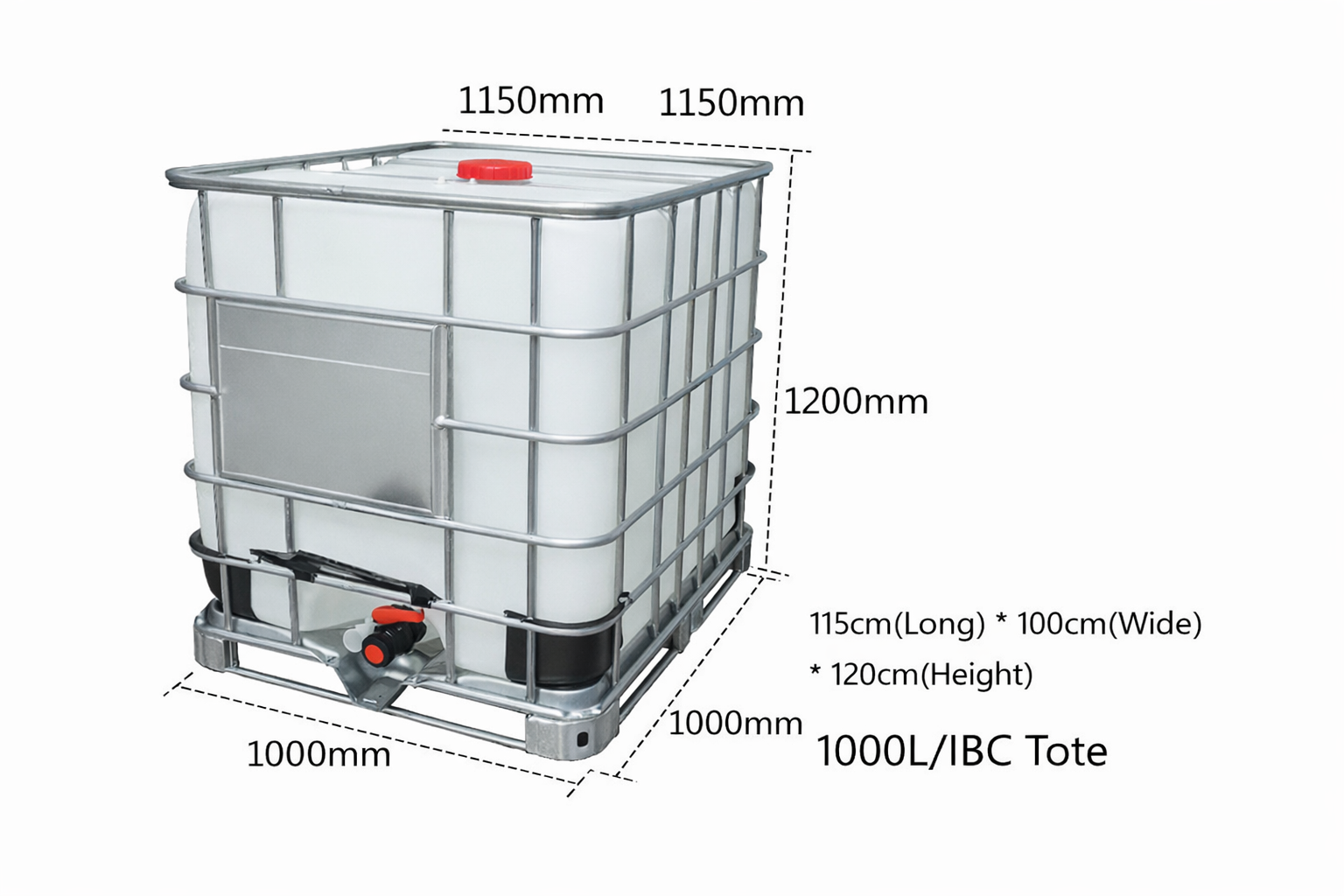
Packaging, Storage & Shipping
Packaging: Liquid and paste grades in 200 kg steel drums or 50 kg plastic drums. Solid and flake grades (F38, F68) in 25 kg paper bags or fibre drums with inner plastic liner.
Storage: Cool, dry and well-ventilated conditions with containers kept closed. Shelf life 2 years from date of manufacture.
Shipping: FOB, CIF and CFR as FCL or LCL via Shanghai Port, with TDS, SDS and COA available for customs and customer regulatory review. Confirm REACH registration, Only Representative coverage and intended-use applicability for the specific grade and destination market.
Frequently Asked Questions
What are block polyethers (poloxamers)?
They are EO-PO-EO triblock copolymers with a hydrophobic propylene-oxide core and hydrophilic ethylene-oxide ends. Adjusting the block sizes sets HLB, foam behaviour and solubility across a wide range.
What is F68 / Poloxamer 188 used for?
F68-type high-EO grades are commonly screened for shear protection in sparged cell culture and for industrial wetting or emulsion processes. Do not assume a Kemaix F68-type grade is pharmacopeial Poloxamer 188 without exact identity and specification review.
Which grade works best as a low-foam defoamer?
Low-HLB liquid grades such as L61 and L62 are starting candidates for foam-control screening. Verify cloud point, dose, persistence, oxygen transfer and downstream compatibility in the actual process.
What is the difference between the L, P and F series?
L grades are liquids used mainly for low-foam detergency and foam control; P grades are pastes offering intermediate properties; F grades are high-EO solids used for wetting, dispersion and shear-protection screening. Pharmaceutical use requires the exact poloxamer identity, compendial grade and route-specific documentation.
What HLB range do the block polyethers cover?
From about 3 to 30, providing starting candidates for foam control, wetting, dispersion and solubilization. Final selection depends on physical form, cloud point and the complete formulation.
Can you customise the EO/PO ratio?
Custom EO/PO and molecular-weight targets can be reviewed against manufacturing and analytical feasibility. Confirm identity, cloud-point method and release limits in the written specification.
Need a Specific HLB or EO/PO Ratio?
Tell us whether you need foam control, low-foam detergency, dispersing or shear protection — we will recommend the grade, supply TDS and COA, and send 200–500 g samples.